

VICDOWEX Launches 50+ Module Temporary Building Project for Xiegang Affordable Housing Developmen
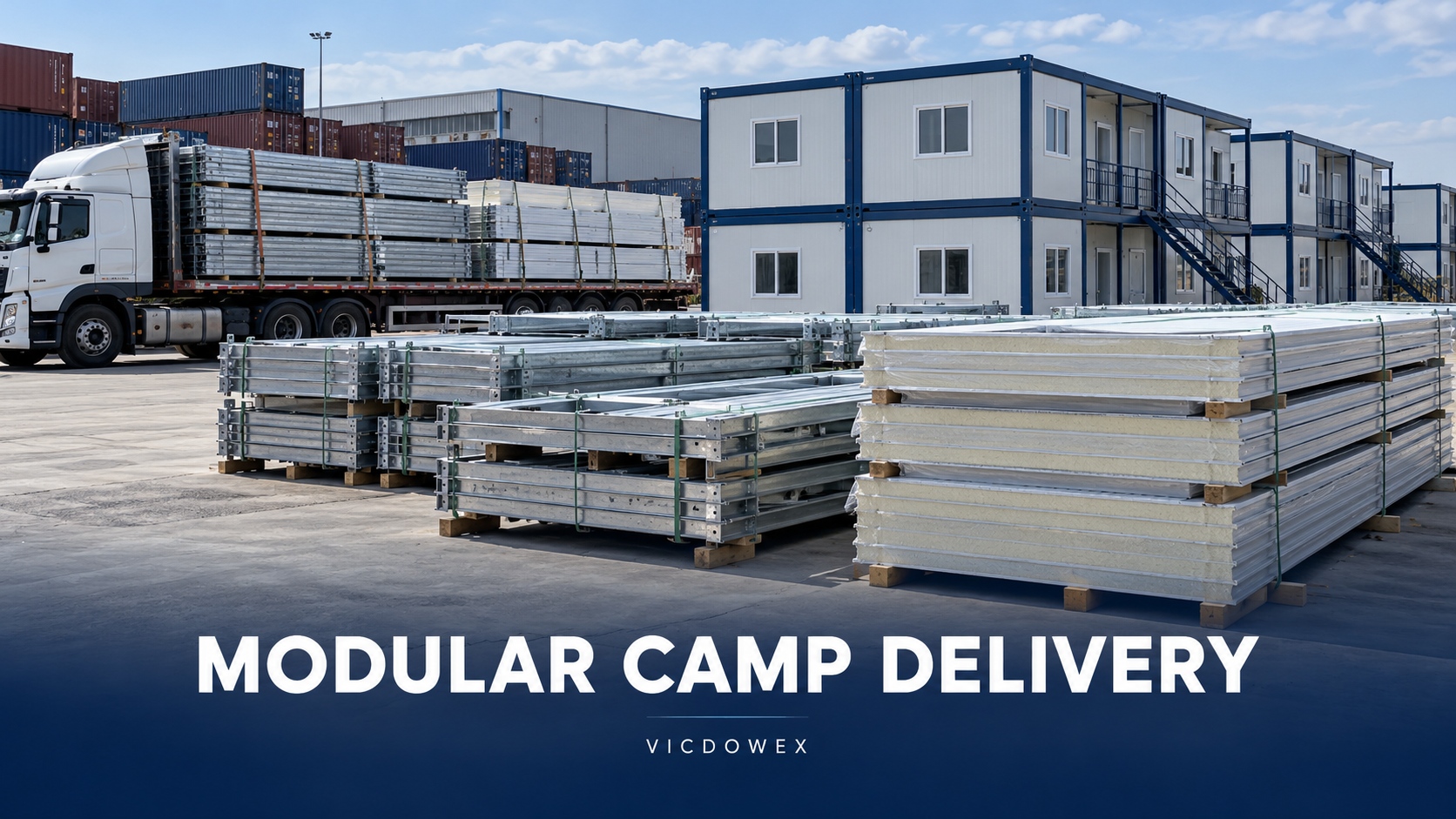
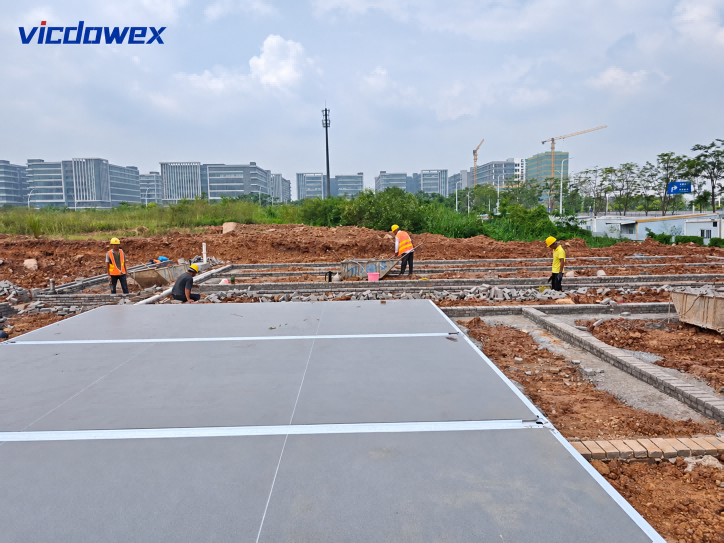
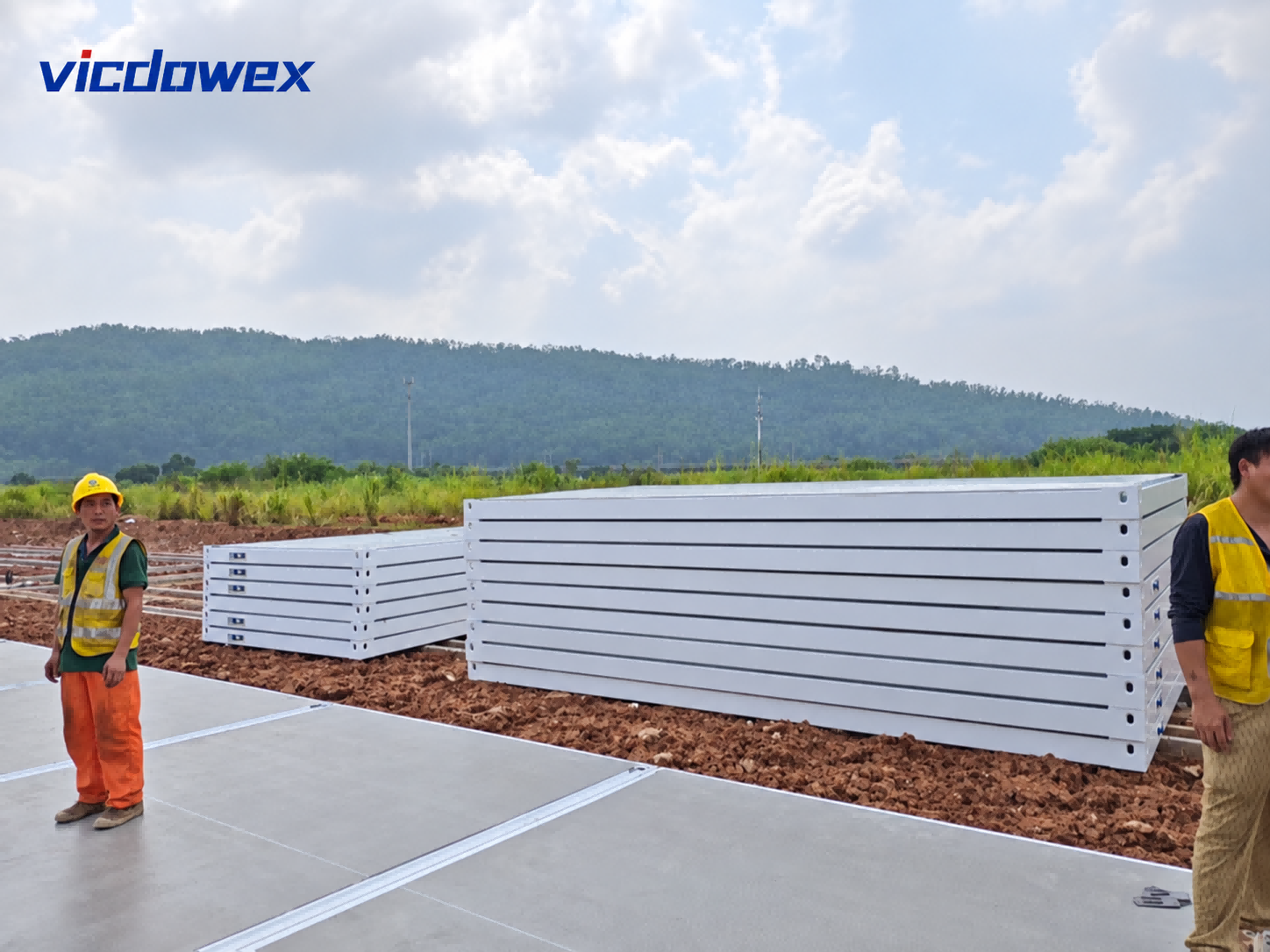
VICDOWEX has officially started work on a new temporary modular building project supporting an affordable housing development in Xiegang, Guangdong, China.
The project entered the implementation stage on September 7, 2026 and involves the deployment of more than 50 modular container units, with a contract value of over RMB 600,000 including tax.
The modular units will be used to support the temporary space requirements of the construction site during the development period.
For a large housing project, temporary buildings are not simply auxiliary structures. Before the permanent buildings are completed, the project team already needs functional spaces for management, coordination, staff support and other site activities.
The key challenge is therefore not only to provide enough temporary space, but to deploy that space quickly, efficiently and in coordination with the overall construction schedule.
This is where modular container buildings provide a practical solution.
Temporary Facilities as Part of the Construction Plan
On a large construction site, temporary facilities usually need to be established before or alongside the main construction work.
As the scale of the project increases, temporary buildings can no longer be treated as several isolated rooms placed around the site.
They need to be planned around:
-
Project management requirements
-
Site access and transport routes
-
Available installation areas
-
Material storage zones
-
Construction sequencing
-
Future site operations
-
Staff and support functions
When a project requires dozens of modules, the focus shifts from simply manufacturing individual units to coordinating an entire temporary building system.
For the Xiegang project, the more than 50 modular units therefore need to be considered as part of one coordinated construction solution.
Why Modular Container Buildings Work Well for Construction Sites
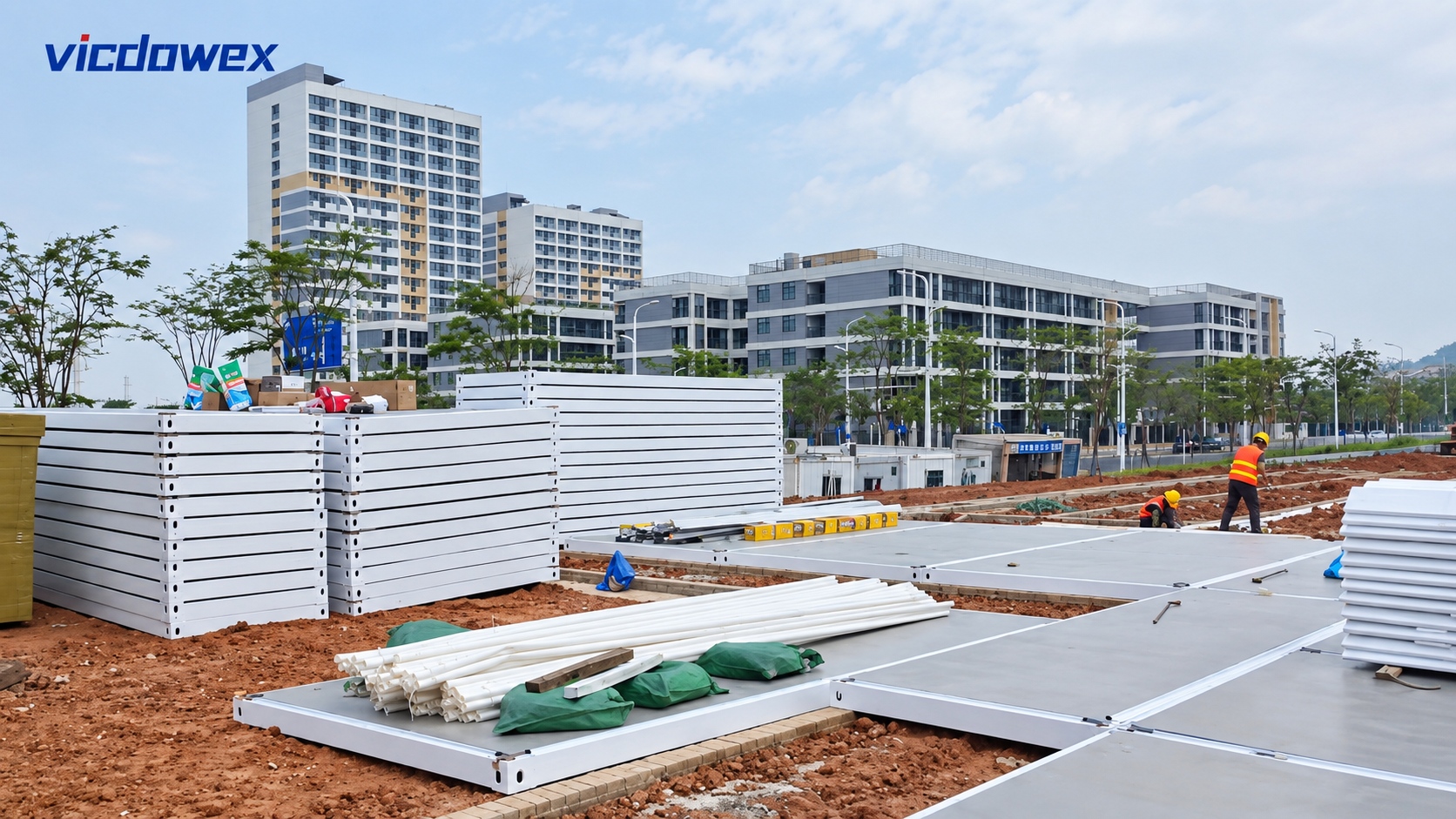
One of the key advantages of modular construction is that a significant portion of the building work can be completed before the units arrive on site.
Structural frames, wall systems, doors, windows and other major components can be prepared through standardized factory production.
Once delivered, the site team can focus more on:
-
Unloading
-
Positioning
-
Module installation
-
Structural connections
-
Weatherproofing
-
Utility coordination
-
Final functional preparation
Compared with extensive on-site fabrication, this approach can reduce site workload and make the construction process easier to organize.
For projects where the permanent buildings are being constructed at the same time, reducing unnecessary temporary-building work on site can also help minimize interference with other construction activities.
More Than 50 Modules Require More Than Product Supply
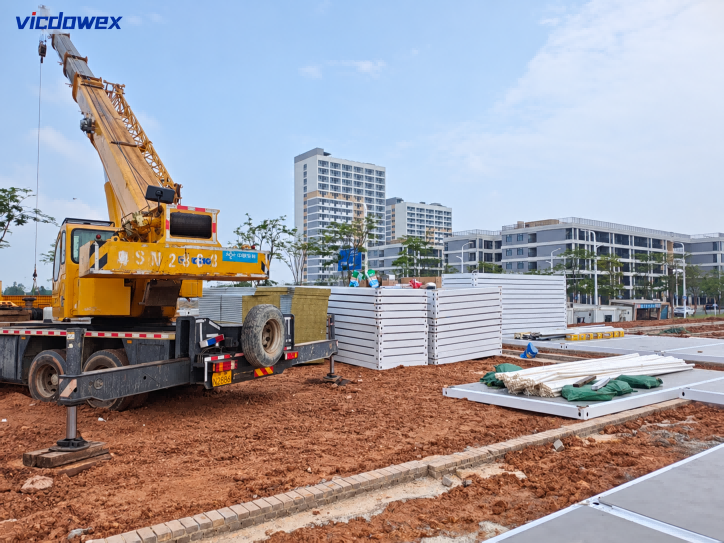
A project involving more than 50 modules requires coordination across multiple stages.
The typical workflow includes:
Project Confirmation→ Material Preparation→ Factory Production→ Quality Inspection→ Packing→ Transportation
→ Site Unloading→ Module Installation→ Module Connection→ Supporting Works
The performance of the final project depends on how effectively these stages are connected.
For example, if transportation is not coordinated with site readiness, modules may need to be stored or moved more than once.
If the production sequence does not match the installation sequence, on-site work can become less efficient.
If temporary building layouts are not coordinated with construction roads, lifting areas and future work zones, the temporary facilities themselves may interfere with the main project.
This is why larger modular projects require more than manufacturing capacity.
They require coordination between:
Standardized Production Helps Support Larger Projects
When dozens of similar modules are required, standardized production becomes particularly valuable.
Repeated structural and enclosure systems allow the manufacturer to organize materials, fabrication and quality control more consistently.
For project buyers, this can make it easier to manage:
-
Unit specifications
-
Production batches
-
Delivery schedules
-
Installation sequences
-
Replacement components
-
Future expansion
Standardization does not mean every building must be identical.
Individual modules can still be arranged and combined according to different functional requirements.
Depending on the project, modular spaces can support functions such as:
-
Site offices
-
Staff accommodation
-
Meeting rooms
-
Management facilities
-
Sanitary spaces
-
Storage
-
Canteens
-
Other temporary project facilities
Reducing On-Site Construction Pressure
Traditional temporary buildings may involve substantial on-site cutting, welding, material handling and wet construction.
This can require additional labor, storage space and working areas.
Modular construction moves more of this work into the factory.
By completing major components in advance, the construction site can concentrate on installation and connection rather than manufacturing the building itself.
This is particularly useful when:
-
Site space is limited
-
Multiple contractors are working simultaneously
-
Construction traffic is heavy
-
The project schedule is tight
-
Temporary facilities must be operational quickly
For large construction projects, the value of modular buildings is therefore not simply that one unit can be installed faster.
The larger advantage is that multiple functional spaces can be produced, transported and deployed through a repeatable project process.
Temporary Buildings Also Affect Overall Project Efficiency
Temporary facilities are sometimes treated as a secondary part of a construction project.
In practice, however, they directly support the people responsible for delivering the permanent project.
If management teams, site staff and support functions do not have suitable working space, the main construction process can also be affected.
A good temporary building solution therefore needs to consider:
-
When the spaces must become operational
-
How quickly they can be installed
-
How they fit within the site layout
-
How they interact with the main construction schedule
-
How easily they can be adjusted as the project develops
The Xiegang project demonstrates how modular container buildings can support these requirements in a large housing development.
From Individual Units to Modular Project Solutions
The Xiegang affordable housing temporary facilities project has now entered its initial implementation stage.
As the project progresses, VICDOWEX will continue coordinating production, transportation and on-site implementation according to actual construction requirements.
For VICDOWEX, project-based modular construction is not simply about supplying a certain number of container houses.
The goal is to connect:
into a more complete modular building solution.
As construction, infrastructure and industrial projects place increasing pressure on schedules, labor and site efficiency, modular buildings are becoming an increasingly practical option for temporary offices, workforce accommodation and complete project camps.
VICDOWEX Modular Building Solutions
VICDOWEX provides modular and prefabricated building solutions for construction, infrastructure, industrial, mining and energy projects.
Our main systems include:
-
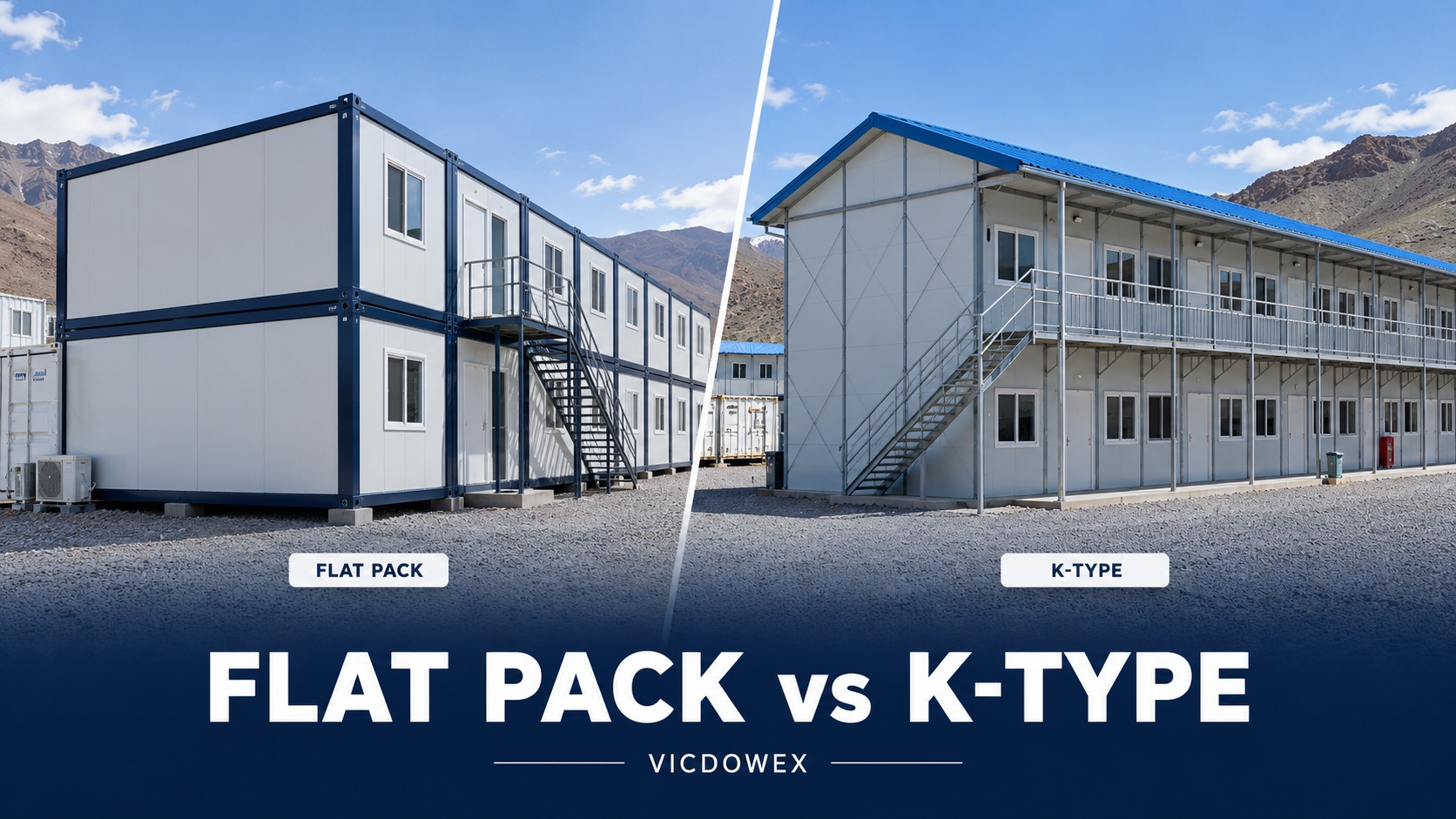
Flat Pack Container Houses
-
Quick-Assembly Container Houses
-
Folding Container Houses
-
Expandable Container Houses
-
Customized Modular Buildings
-
K-Type Prefabricated Houses
-
T-Type Prefabricated Houses
These systems can be configured for:
-
Site offices
-
Worker accommodation
-
Management accommodation
-
Dormitories
-
Meeting rooms
-
Canteens
-
Sanitary facilities
-
Storage
-
Project camps
-
Other temporary or semi-permanent project buildings
Configurations can be adjusted according to project location, quantity, layout, insulation requirements, doors and windows, electrical systems, plumbing and interior requirements.
Planning a Temporary Building or Project Camp?
If your construction, infrastructure, mining, energy or industrial project requires temporary offices, accommodation or a modular project camp, send VICDOWEX your:
-
Project location
-
Required quantity
-
Intended application
-
Number of occupants
-
Layout requirements
-
Delivery schedule
-
Project drawings, if available
We can help evaluate a suitable modular building configuration for your project.
Email: info@vicdowex.com
WhatsApp: +852 9388 4727