






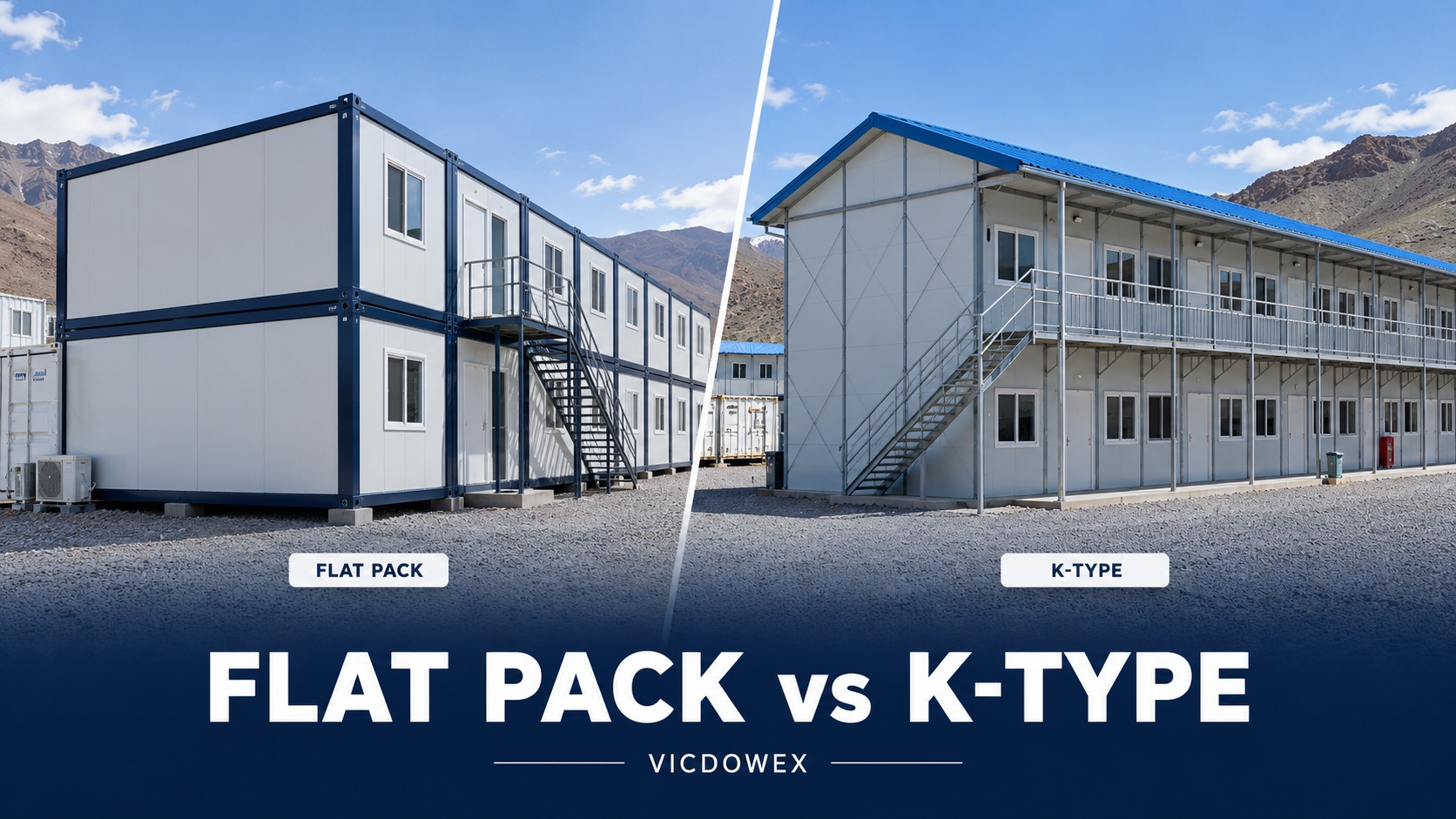
Denver Offsite Summit: How to Speed Up Modular Project Delivery
Following the 2026 Offsite Construction Summit held on September 10 at the Colorado Convention Center in Denver, one message stood out for modular project teams: better coordination across design, manufacturing, logistics and on-site assembly can directly influence project delivery.
The official program centered on an important theme: breaking down the traditional silos between design, engineering, manufacturing, logistics and on-site assembly. The goal is straightforward—better coordination across the project lifecycle can help reduce inefficiencies, shorten delivery timelines and support faster return on investment.
For buyers planning modular offices, worker accommodation or construction camps, this discussion has direct practical relevance.
A modular building does not become operational simply when factory production is completed. Its actual delivery schedule depends on a connected series of decisions—from drawing approval and material selection to factory production, transportation, site preparation, installation and final handover.
For VICDOWEX, this reinforces an important principle:
The delivery schedule should be considered while project requirements are still being defined, rather than after production has already begun.

Begin with the Required Date of Use
A modular project schedule should start with one practical question:
When does the building need to be operational?
For example, a contractor may need a project office before the main workforce arrives, while worker accommodation, dining facilities, meeting rooms or other supporting buildings may be required at different stages of the project.
Working backward from the required date of use helps the project team identify key milestones, including:
-
Drawing approval and specification confirmation
-
Factory production and inspection
-
Packing and dispatch
-
Transportation and site arrival
-
Unloading and material organization
-
Installation and module connections
-
Utility connections and finishing work
-
Inspection and final handover
Some activities can overlap, while others depend on previous work being completed.
For this reason, buyers should also clarify what a quoted “lead time” actually includes.
Factory completion, shipment departure, arrival at the destination, delivery to the project site and readiness for use are different milestones.
Defining these stages clearly helps manufacturers, logistics providers, contractors and site teams work toward the same target.
Bring Manufacturing Requirements into the Design Stage
Modular construction requires closer coordination between design and manufacturing than many conventional procurement processes.
The Modular Building Institute highlights the importance of finalized designs before manufacturing begins. For buyers, this means that the modular supplier should be involved while the building layout and technical requirements are still being coordinated.
For a project office, discussions may include:
-
Office and meeting room sizes
-
Entrances and circulation
-
Electrical requirements
-
Air-conditioning arrangements
-
Doors and windows
-
Internal partitions
For worker accommodation, attention may shift toward:
-
Room capacity
-
Bathroom and shower arrangements
-
Corridor layout
-
Supporting facilities
-
Water and drainage requirements
-
Future expansion
These decisions affect material quantities, factory work, service connections and the amount of installation required at the destination.
Transport and site conditions should also be considered during this stage.
Site access, unloading space, crane operating areas, material storage capacity and the final building arrangement can all influence how a modular project should be produced, packed and delivered.
Changes are still possible later in the project, but their timing matters.
A major layout revision after manufacturing has started may require revised drawings, additional materials, production changes or adjustments to the shipping plan. Establishing a clear approval and change-management process therefore helps make the impact on schedule and cost more visible.
Coordinate Factory Production with Site Preparation
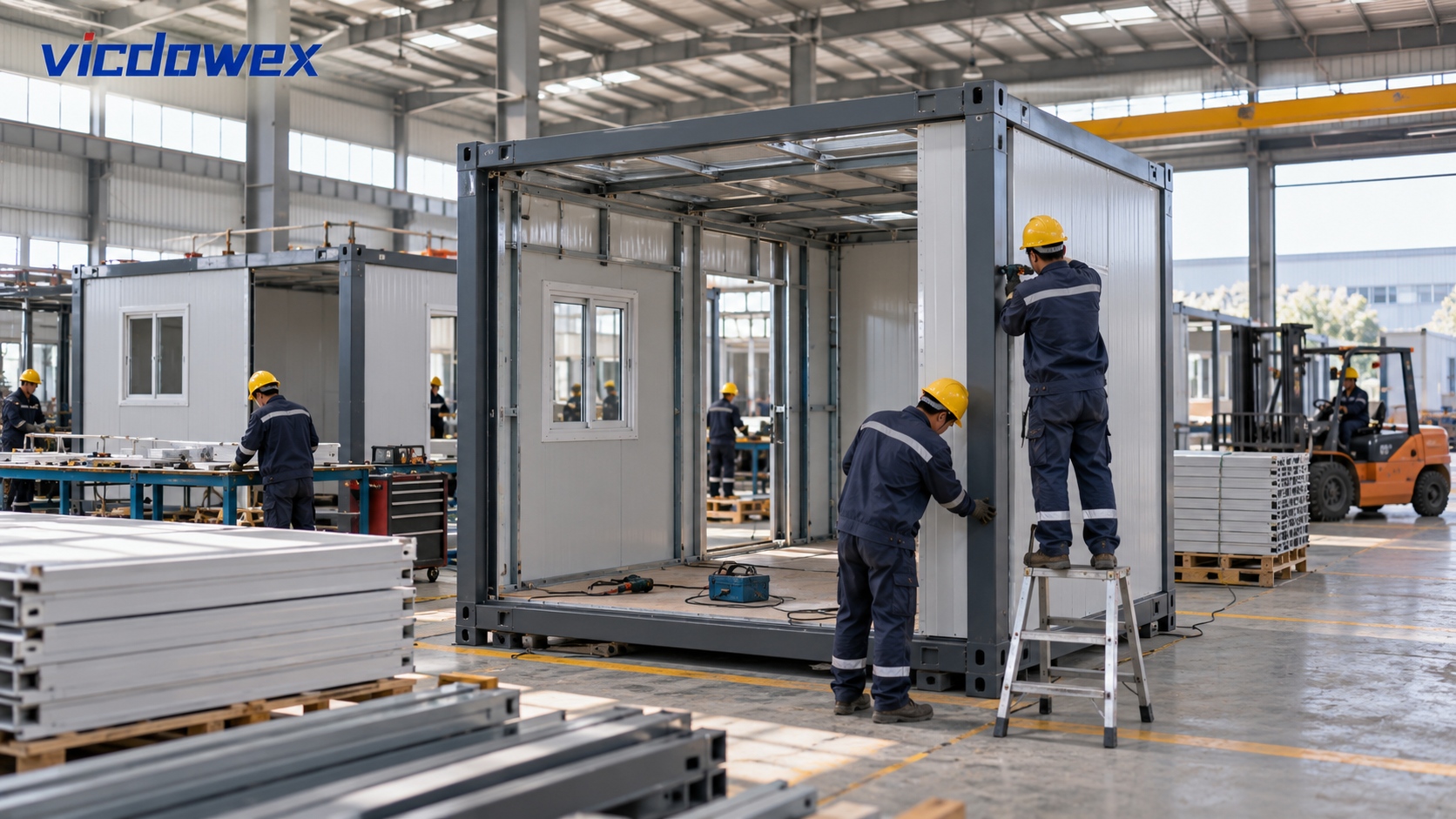
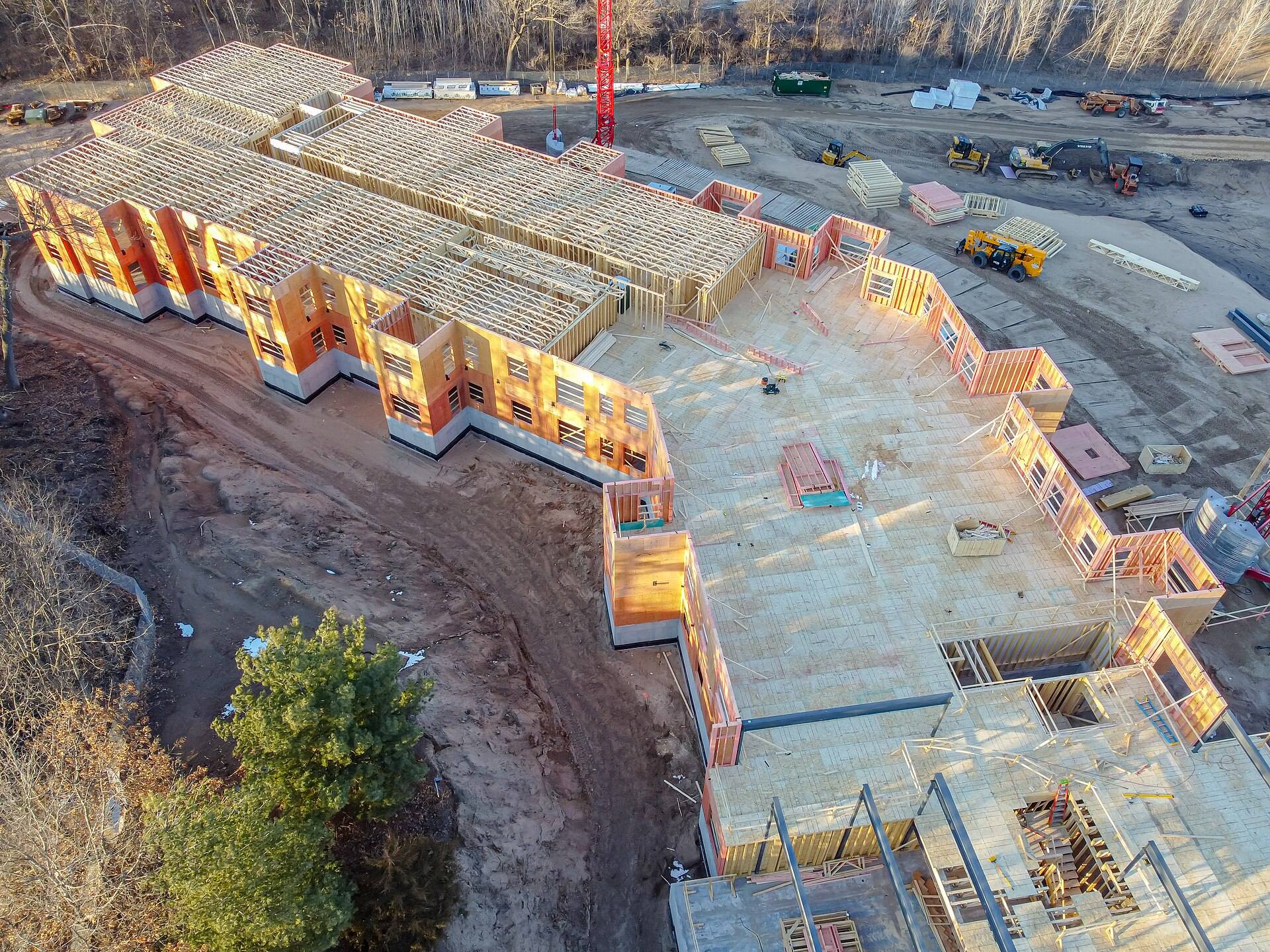
One of the major schedule advantages of modular construction is the ability to carry out factory production while suitable site preparation progresses in parallel.
According to the Modular Building Institute, modular components can be manufactured in a controlled factory environment while activities such as excavation, grading and foundation work take place at the project site.
However, parallel construction only creates a schedule advantage when both sides are properly coordinated.
The factory needs to understand when the site will be ready to receive materials. At the same time, the site team needs reliable information about production progress and expected dispatch dates.
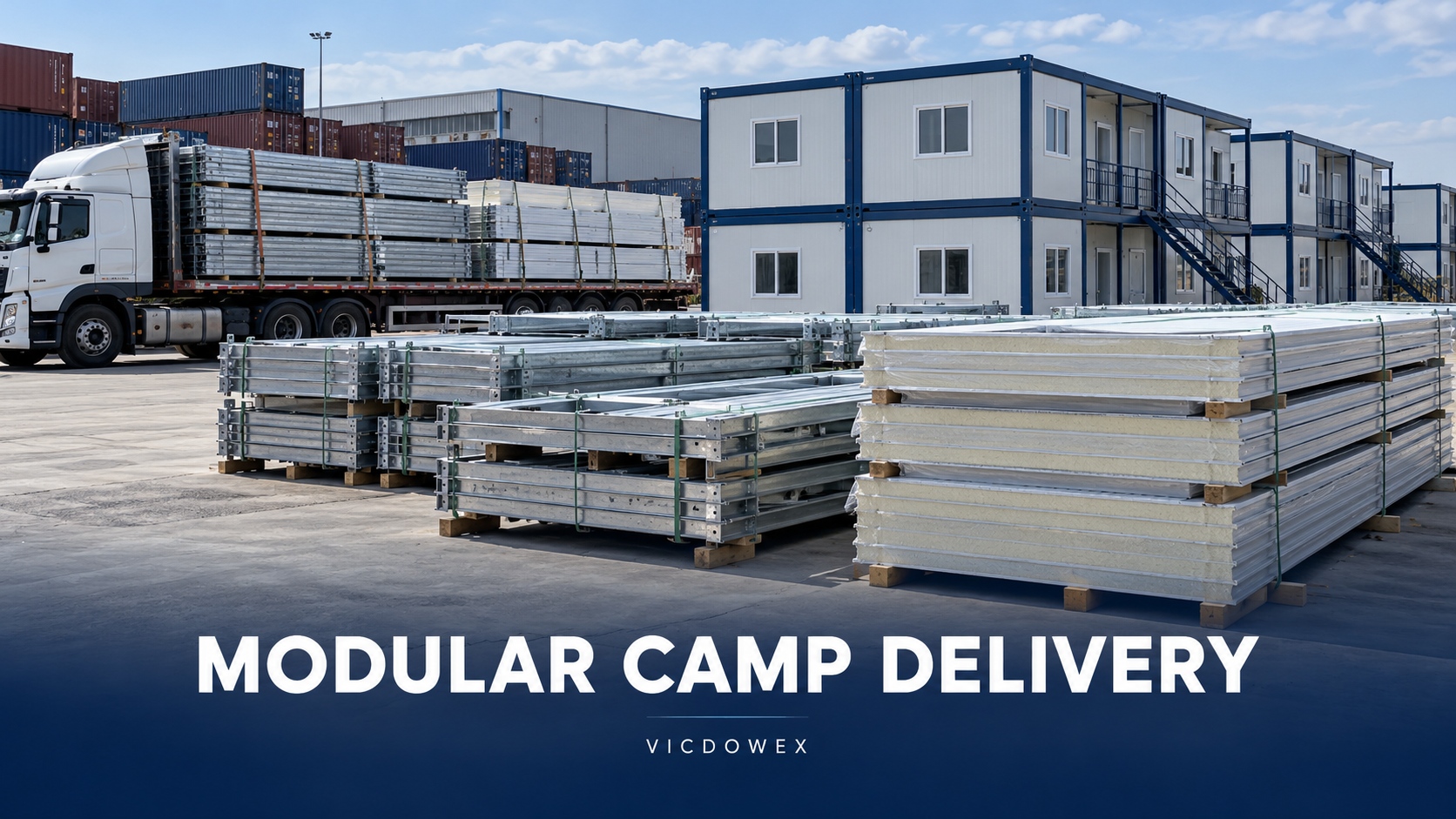
For flat pack container buildings, the agreed supply scope should clearly identify what is completed or prepared in the factory and what work will take place at the destination.
Depending on the project configuration, this may include:
-
Structural components
-
Wall and roof panels
-
Doors and windows
-
Electrical systems
-
Plumbing components
-
Flooring
-
Interior finishing
-
Supporting accessories
Meanwhile, the site team can prepare foundations, access routes, drainage systems, utility connection points, unloading areas and material storage according to the approved project plan.
Regular communication between both teams makes it easier to identify potential mismatches before they affect installation.
If the site falls behind schedule, for example, the project team may need to review dispatch dates, delivery batches or temporary storage arrangements before the materials leave the factory.
Plan Transportation Around the Installation Sequence
Logistics should not be treated as a separate activity that begins only after production is complete.
For overseas modular projects, delivery may involve several stages:
Factory loading → inland transportation → port handling → ocean shipping → customs clearance → inland delivery → project site unloading
Each stage needs to fit into the overall project schedule.
The buyer and supplier should agree in advance on shipping responsibilities, required documentation, expected delivery conditions and the information needed by the receiving team.
This becomes particularly important for projects involving multiple buildings or several shipment batches.
Packing and dispatch should reflect the intended installation sequence.
Components can be identified according to building area, module number or installation stage so that the site team can quickly locate the materials required for each part of the project.
A good logistics plan should also consider supporting components.
Receiving structural frames without the corresponding wall panels, doors, fasteners or connection materials may leave installation crews waiting even though the main shipment has already arrived.
Site capacity matters as well.
Some project sites have limited unloading areas or storage space. Matching shipment quantities and arrival dates with actual site conditions can reduce repeated handling and keep installation areas accessible.
Carry the Schedule Through to Handover
Delivery planning should continue beyond factory dispatch.
Before the first shipment arrives, the project team should review:
-
Foundation readiness
-
Site access
-
Unloading arrangements
-
Crane or lifting requirements
-
Material storage
-
Installation manpower
-
Approved drawings
-
Utility connection requirements
The installation team should have access to current drawings, an agreed work sequence and clearly defined responsibilities.
Once the modules or components reach the site, the schedule may continue through structural assembly, module connections, weatherproofing, wall panel installation, electrical and plumbing connections, interior finishing, inspection and handover.
For buyers, defining the handover scope is therefore an important part of procurement.
The parties should establish which works are included in the supplier's scope, which will be completed by local contractors and which items must be inspected before the building enters operation.
This is especially important for modular offices, accommodation buildings and project camps that depend on electricity, water, drainage, air conditioning and other services for daily use.
Consider Phased Delivery for Larger Project Camps
Large project camps do not always need to be delivered as one complete batch.
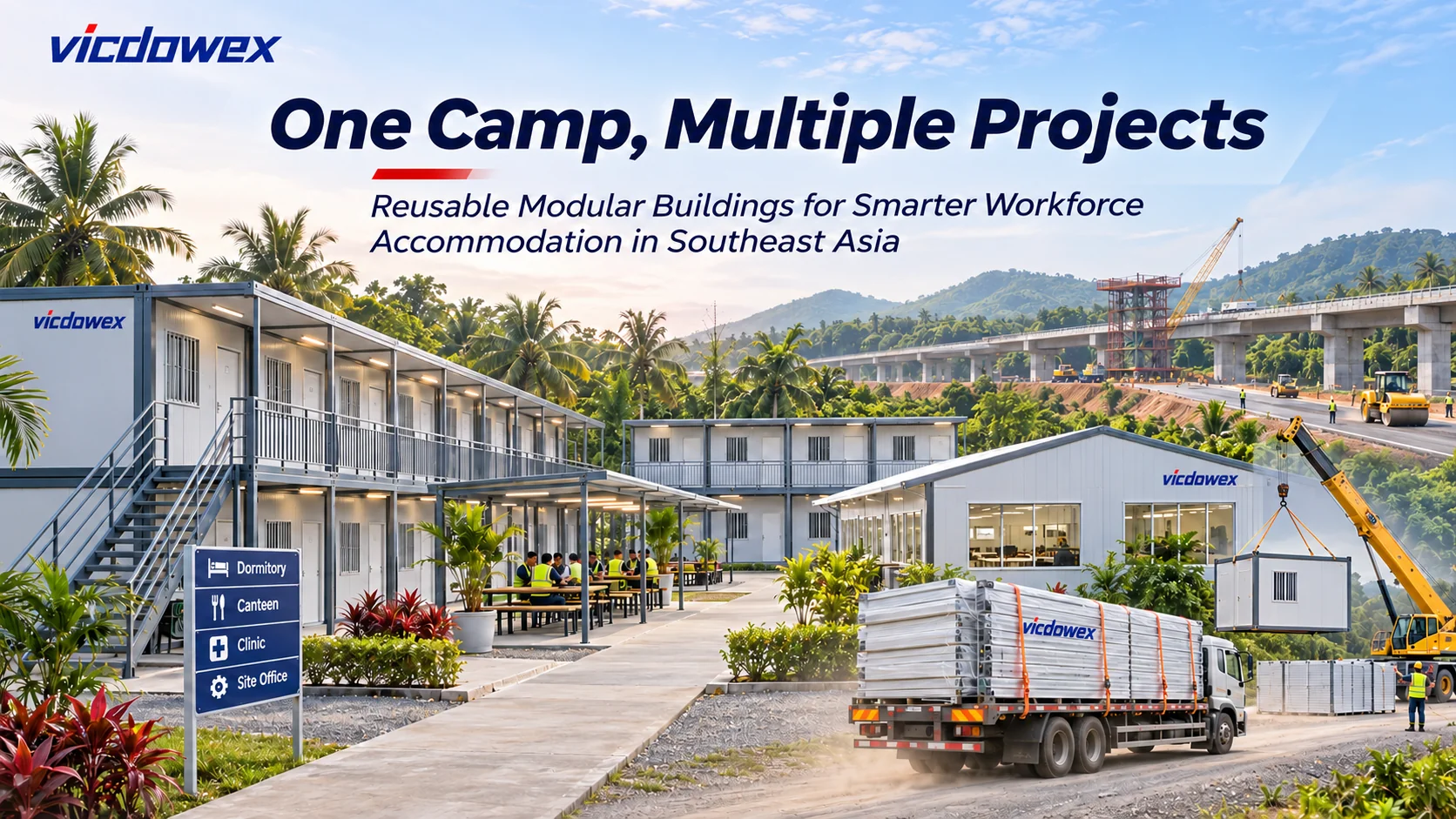
In some cases, phased delivery can be aligned with workforce mobilization and the actual sequence of project operations.
For example, a contractor may first require:
Phase 1: Management offices and initial accommodation
followed by:
Phase 2: Additional worker accommodation
and later:
Phase 3: Dining, meeting, sanitation or other supporting facilities
The exact arrangement will depend on the project, but discussing phased deployment early can help buyers coordinate production capacity, transportation, installation resources and site readiness more effectively.
Each phase should have a clearly defined scope and should include the facilities and utility connections required to make that part of the project usable.
Early planning also makes it easier to consider how future expansion will connect with the initial building layout.

A Practical Reference: 151 Flat Pack Container Units in Guangzhou
A current VICDOWEX project in Guangzhou, China, provides a practical example of how modular project delivery requires coordination across multiple stages.
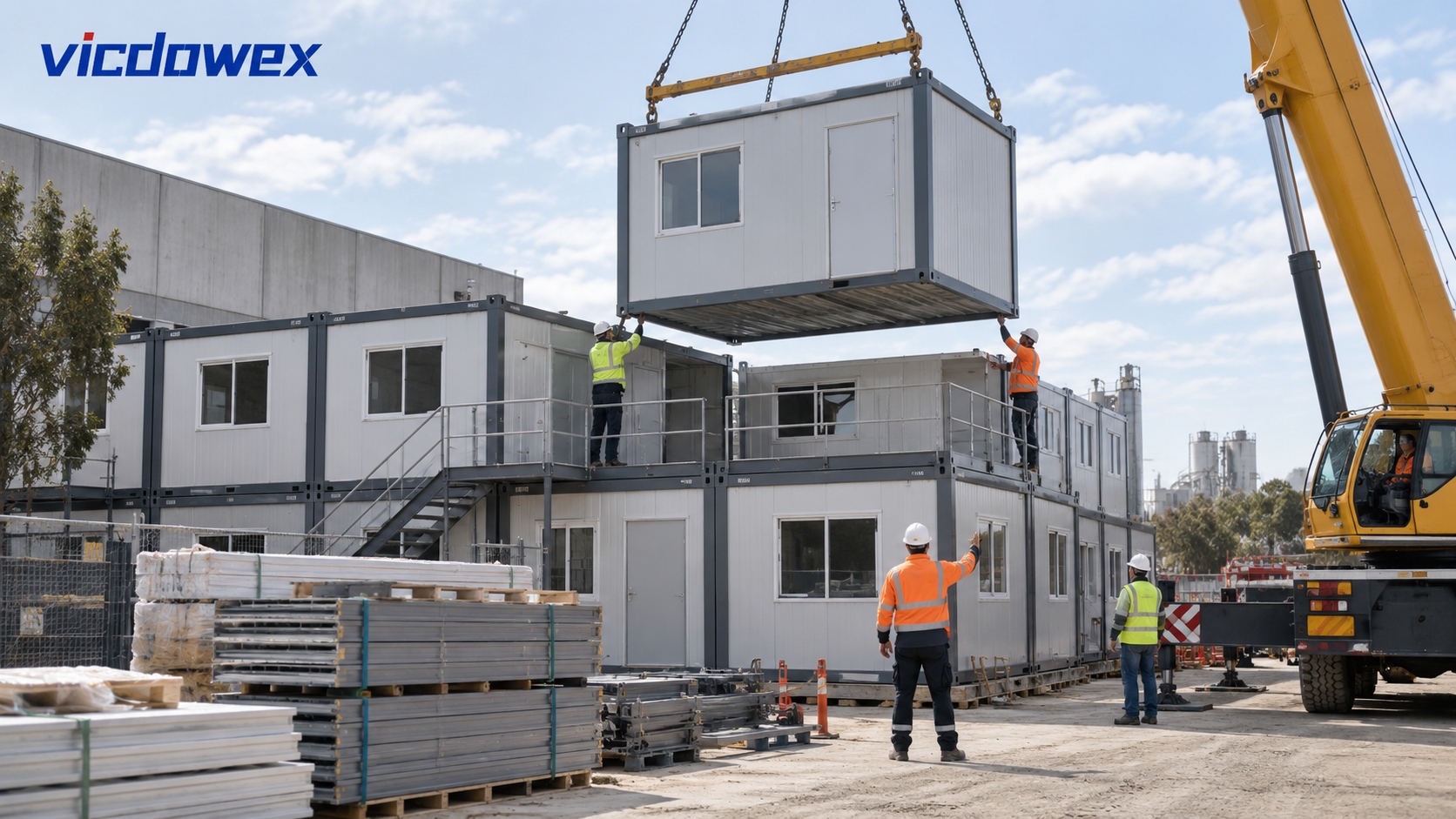
The project uses 151 flat pack container units in a two-storey modular arrangement to provide:
-
Project office space
-
Management staff accommodation
Rather than treating each container as an individual room, the modules are planned as part of an integrated building layout.
The project workflow includes:
Layout development → factory production → transportation → unloading → lifting → module connections → wall panel installation → supporting works
With a project of this scale, site access, material storage areas, crane operating space and installation sequence all influence delivery efficiency.
The Guangzhou project therefore provides a useful reference for buyers planning modular project offices, staff accommodation or larger construction camps.
For similar projects, VICDOWEX can support layout planning, product configuration, manufacturing and logistics coordination based on the required building functions, site conditions and target schedule.
Frequently Asked Questions
When should buyers begin discussing the modular project schedule?
Schedule planning should begin during the initial project stage, once the intended use, project location, approximate capacity and target date of use are being defined.
Early discussions help identify the drawings, specifications, site information and logistics conditions that must be confirmed before manufacturing begins.
Does factory lead time include overseas transportation and installation?
Not necessarily.
The quotation or project agreement should clearly define which stages are included. Buyers should separately confirm factory completion, shipment, destination arrival, site delivery and installation milestones, together with the responsibilities of each party.
Can a modular project schedule be prepared from the unit quantity alone?
Unit quantity is only one factor.
A practical project schedule also depends on building configuration, drawing approval, material specifications, factory scope, production requirements, transport route, shipment method and site readiness.
Can a modular camp be delivered in stages?
Yes, phased delivery can be considered when the layout, supporting facilities, production batches, logistics and installation sequence are planned accordingly.
The delivery plan should reflect workforce mobilization, site conditions and the date when each area needs to become operational.
Plan Your Modular Project with VICDOWEX
If you are planning a modular project office, worker accommodation building or construction camp, share the following information with our team:
-
Project location
-
Required capacity
-
Intended building functions
-
Approximate quantity
-
Available site dimensions or layout
-
Target date of use
With this information, VICDOWEX can better understand the project conditions and discuss a suitable building configuration, quotation, manufacturing plan and delivery schedule.
Email: info@vicdowex.com
WhatsApp: +852 9388 4727
Website: www.vicdowex.com
Alibaba Store: vicdowex.en.alibaba.com