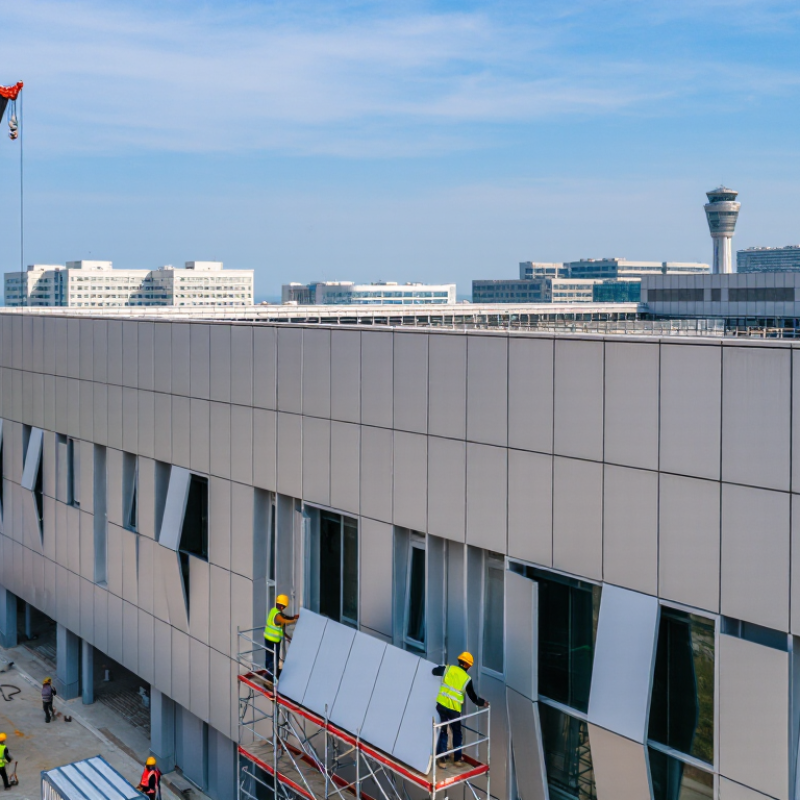
So, why pick aluminium wall panels for projects around the world? The real answer starts with performance—not just looks. Aluminium Wall Panel systems are lightweight, resist corrosion, and give you a lot of design freedom, which is why they turn up in airports, hospitals, offices, and coastal builds. A typical panel? Two installers can carry it, it can be lifted across a narrow scaffold, and it can be fitted around windows with relatively little disruption on site. That kind of practical detail really matters when labor, transport, and weather change from one country to the next.
The International Aluminium Institute’s Aluminium Sector Greenhouse Gas Pathways to 2050 report expects aluminium demand to rise from roughly 86 million tonnes in 2020 to 119.5 million tonnes by 2050. The same industry body also reports that about 75% of all aluminium ever produced is still in use. Those numbers do support aluminium’s long service life and recycling potential. But they don’t automatically make every project sustainable. You still have to check energy sources, coatings, transport distances, and end-of-life recovery. No panel is green just because it’s aluminium.
As aluminium façade specialist Dr. Matthias Hoj put it, “Material selection must connect durability, design, and responsible production.” It’s a useful principle—though maybe a little too neat on its own. Global teams need to compare Aluminium Wall Panel systems with alternatives, including the Exterior Wall Rockwool Sandwich Panel, against local fire, thermal, acoustic, and wind requirements. Environmental Product Declarations, recycled-content evidence, and tested fixing details give you stronger assurance than a glossy brochure. The World Green Building Council also stresses transparent life-cycle thinking in building decisions. So yes, aluminium deserves serious consideration—but not blind preference. Performance is easy to see. Supply-chain quality? That’s a lot harder.
What Are Aluminium Wall Panels?
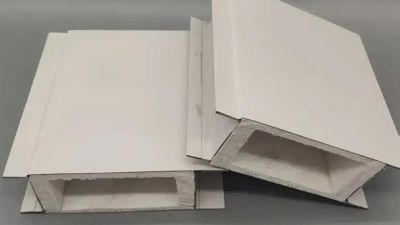
Aluminium wall panels are lightweight building products made from aluminium sheets formed around a structural or insulating core. They create a clean external surface while reducing the load placed on the supporting structure. Depending on the design, panels may use mineral wool, foam, or a honeycomb core. Their performance is not identical.
For global projects, panel selection should match local weather, fire standards, wind pressure, and installation methods. A coastal building may need a suitable coating and carefully sealed joints. In colder regions, thermal breaks can reduce heat transfer around fixings. A
Wall Fireproof Rockwool Sandwich Panel
may be considered when fire resistance and insulation are major priorities, but its tested assembly must match the project specification. Aluminium panels are corrosion-resistant, though they are not maintenance-free. I have seen small drainage mistakes create staining beneath otherwise attractive façades. That detail deserves more attention.
Tips:
Check the full tested wall system, not only the panel core. Confirm thickness, coating durability, joint movement, and fixing capacity with qualified engineers. Request samples before approval. A small sample can reveal colour variation, surface texture, and edge quality under real light. Also review cleaning access and replacement procedures. These practical points often affect long-term reliability more than appearance alone. Still, project teams should question assumptions. A panel that performs well in one climate may need a different specification elsewhere.
How Are Aluminium Wall Panels Designed and Manufactured?
Why Choose Aluminium Wall Panels for Global Projects?
How Are Aluminium Wall Panels Designed and Manufactured?
Aluminium wall panels begin with the building’s purpose, climate, and structure. Designers study wind loads, rainfall, sunlight, and thermal movement before choosing panel dimensions. Coastal projects need stronger corrosion protection. Cold regions require careful allowance for expansion and contraction. Experience matters here, because attractive drawings cannot solve poor site conditions.
Manufacturing usually starts with high-quality aluminium sheets. Computer-controlled equipment cuts each sheet with precise dimensions. Workers then bend, fold, and shape the panels according to approved drawings. Corners may use welded joints, mechanical connections, or reinforced folds. The selected method depends on appearance, strength, access, and installation speed. Surface treatment follows, such as powder coating or anodizing. Colour samples should be checked under natural and artificial light. Small differences can become obvious across a large façade.
Quality control continues throughout production. Technicians inspect flatness, coating consistency, edge accuracy, and fixing locations. Trial assembly can reveal problems before shipment. It is worth repeating this step. A panel may meet its drawing but still fit poorly on site. Designers should also review drainage paths, replacement access, and local installation skills. Not every elegant solution is practical. Clear records, material certificates, and test results help project teams make dependable decisions across different countries.
Which Performance Benefits Do Aluminium Wall Panels Provide?
Aluminium wall panels combine low weight, weather resistance, and design flexibility for demanding global projects. A typical panel can reduce façade handling effort, especially when installers work from narrow scaffolding decks. Its folded edges also create clean joints around windows, corners, and service openings. However, aluminium alone does not guarantee thermal efficiency. Insulation thickness, subframes, fasteners, and thermal bridges control the real U-value. The 2023 Global Status Report for Buildings and Construction states that buildings consume about 30% of global final energy. Façade detailing therefore matters as much as appearance.
Durability is another practical advantage. Properly coated aluminium resists rain, ultraviolet exposure, and many urban pollutants, while damaged surfaces still require inspection. Recycling adds measurable value. European Aluminium reports that recycling aluminium requires roughly 5% of the energy used for primary production. That benefit depends on collection and separation, not optimistic paperwork. Fire performance must be checked as a complete assembly, not judged from the metal skin. A Building Exterior Wall Rockwool Sandwich Panel may provide strong insulation and tested fire resistance, yet its joints and supporting structure still need verification. EN 13501-1 classification can support specification decisions, but project teams should request current test evidence for the exact panel build-up. Small gaps matter. I have seen attractive façades lose performance through poorly sealed penetrations. Aluminium wall panels are capable, but they reward disciplined detailing more than fashionable claims.
Where Are Aluminium Wall Panels Used in Global Projects?
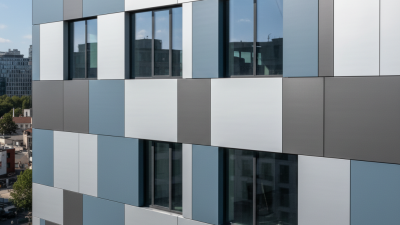
Aluminium wall panels are widely used on offices, hospitals, airports, and education buildings. Their clean lines suit both new construction and sensitive urban renovations. On busy façades, panels can cover concrete repairs without adding a heavy visual layer. They also support ventilated rainscreen systems, which help manage moisture behind the cladding. Details matter.
In coastal projects, designers often select coated aluminium for its light weight and resistance to regular weather exposure. In hot regions, a ventilated cavity can reduce heat transfer across the wall assembly. Retail centers use panels around entrances, canopies, and service areas where impact resistance matters. Industrial buildings may combine aluminium skins with an Exterior Wall Fireproof Rockwool Sandwich Panel in tested wall systems. The assembly must match local fire, wind, thermal, and structural requirements.
Global project teams usually review material certificates, coating data, and installation records before approval. A full-size façade mock-up can reveal drainage problems, joint movement, or uneven shadow lines. Experienced installers check fastener spacing and allow movement around windows. Small errors become visible under strong afternoon light. Aluminium is not automatically the right choice for every climate or budget. Some projects need thicker gauges, stronger subframes, or different finishes than early drawings suggest. That uncertainty deserves honest review before fabrication.
How Do Aluminium Wall Panels Support Sustainable Construction?
Aluminium wall panels can support sustainable construction when their full life cycle is considered. The 2023 UNEP Global Status Report for Buildings and Construction states that buildings used 34% of global energy and produced 37% of energy and process-related emissions in 2022. That pressure makes efficient material selection important. Aluminium is lightweight, durable, and suitable for prefabricated installation, which can reduce site waste and transport loads. The International Aluminium Institute reports that recycled aluminium requires about 5% of the energy used for primary production. That is a strong figure. However, recycled content is not automatic.
Project teams should request verified Environmental Product Declarations and review transport, coatings, maintenance, and end-of-life data. Panels fixed mechanically are easier to remove, repair, and recycle than permanently bonded systems. Design details matter. A poorly planned joint can trap moisture and shorten service life. EN 15804-based assessments can help compare products consistently across global projects. Local recycling infrastructure must also be checked before making circularity claims. An Environmental Product Declaration does not make a panel sustainable by itself. It only improves transparency. The honest question is whether the panel remains useful, maintainable, and recoverable after decades of exposure. In practice, that requires collaboration between designers, installers, facility managers, and recyclers.
Why Choose Aluminium Wall Panels for Global Projects?
Aluminium can be recycled repeatedly without losing its basic material properties. According to the International Aluminium Institute, recycling aluminium requires approximately 95% less energy than producing primary aluminium. The chart shows the relative energy demand when different recycled-content levels are used, with primary aluminium production indexed at 100.
Data basis: International Aluminium Institute, recycled aluminium uses approximately 5% of the energy required for primary aluminium production. Intermediate values are calculated from this relationship.
What Should Project Teams Consider Before Choosing Them?
Why Choose Aluminium Wall Panels for Global Projects?
What Should Project Teams Consider Before Choosing Them?
Aluminium wall panels offer a clean façade, low weight, and adaptable module sizes for many project types. Their value, however, depends on the building conditions behind the finish.
Project teams should assess climate, wind pressure, humidity, and temperature changes before approving a panel system. Coastal air can accelerate corrosion when unsuitable coatings or exposed fixings are selected. Thermal Insulated Wall Panels may improve energy performance, but designers must check U-values, joints, and thermal bridges as one assembly. A panel alone cannot solve poor detailing.
Fire performance requires careful review of the complete wall build-up, not just the aluminium skin. Local codes, testing methods, cavity barriers, and insulation choices can vary between countries. Ask for verified test reports and clear installation guidance. Do not rely on a brochure claim.
Installation quality also affects long-term results. Uneven substrates can create visible lines across a sunlit façade. Small gaps may admit water. Details matter. Experienced teams should review shop drawings, drainage paths, access requirements, and replacement procedures before fabrication. A full-scale mock-up often exposes problems early, although it adds time and cost.
Supply logistics deserve equal attention. Confirm panel sizes, spare quantities, coating consistency, packaging, and site storage conditions. One overlooked issue is future repair: a discontinued finish can make a small replacement look obvious. Aluminium is practical, but it is not maintenance-free. The best decision balances appearance, code compliance, durability, installation risk, and whole-life cost.
Glass Magnesium Board + Rock Wool Composite Panel: Benefits, Applications, and Installation Guide
Glass Magnesium Board + Rock Wool Composite Panel combines a rigid, fire-resistant glass magnesium board facing with a dense rock wool insulation core. This structure provides strong dimensional stability, sound absorption, and improved thermal performance while helping regulate indoor temperature and humidity. The GlobalABC/UNEP *2023 Global Status Report for Buildings and Construction* reports that buildings and construction account for approximately 34% of global energy demand and 37% of energy- and process-related CO₂ emissions, making effective insulation an important part of energy-efficient design. Mineral wool is also widely selected for its non-combustible characteristics; its final fire classification should be verified according to the complete assembly and EN 13501-1 testing.
The panel is suitable for external and internal walls, partition systems, industrial buildings, cleanrooms, warehouses, and other spaces requiring stable temperature and humidity. Before installation, confirm that the substrate is level, dry, load-bearing, and free from dust or oil. Measure and cut panels with appropriate tools, keeping edges square. Fix them with compatible mechanical fasteners or the specified adhesive system, placing fasteners at the recommended spacing and avoiding excessive tightening. Stagger joints between rows, seal gaps around openings, and reinforce corners and penetrations to limit air leakage and moisture entry. Finish the surface according to the project specification, while observing local fire, insulation, and structural requirements.
FAQS
They are lightweight panels made from aluminium sheets around an insulating or structural core. Core options include mineral wool, foam, and honeycomb materials. Their performance varies.
They appear on offices, hospitals, airports, schools, retail centers, and industrial buildings. They suit new construction and urban renovations. They can cover repaired concrete without creating a heavy appearance.
Selection should consider weather, fire standards, wind pressure, and installation methods. Coastal buildings may need durable coatings and carefully sealed joints. Cold regions may benefit from thermal breaks around fixings.
Aluminium generally resists corrosion, but it is not maintenance-free. Coatings, drainage, and joint sealing still need regular inspection. Small drainage mistakes can leave stains beneath the façade.
They can support insulated wall systems and ventilated cavities. A cavity may reduce heat transfer in hot regions. Thermal breaks can limit heat loss around fasteners in colder areas.
Fire performance depends on the complete tested wall assembly. The core alone does not prove compliance. Project teams should verify local fire requirements, fixing details, and installation records.
Check thickness, coating durability, joint movement, fixing capacity, and edge quality. Request samples under real lighting. A small sample reveals colour variation and surface texture.
It can expose drainage issues, uneven shadow lines, and movement problems near windows. Strong afternoon light may reveal small installation errors. Mock-ups are useful, though they cannot replace careful engineering review.
Conclusion
Aluminium Wall Panel systems are lightweight, durable façade solutions made from formed aluminium sheets or composite constructions, designed to provide a clean appearance and reliable protection for buildings. Their design and manufacturing can be adapted to different colours, textures, dimensions, fixing methods, and architectural requirements. With resistance to corrosion, moisture, weather exposure, and impact, these panels can support long-term performance while reducing structural loads and simplifying installation.
In global projects, Aluminium Wall Panel systems are used for commercial buildings, residential developments, transport facilities, public spaces, and industrial properties. They can contribute to sustainable construction through long service life, efficient material use, low maintenance needs, and the potential for recycling. Before selection, project teams should assess local climate, fire and building regulations, thermal and acoustic requirements, structural conditions, installation skills, supply schedules, maintenance plans, and total project cost to ensure the chosen system is suitable for its location and purpose.