Picking among China’s top Sandwich Composite Panels suppliers isn’t just about price tags or glossy catalog shots. You want someone who can show real control over core density, consistent facer bonding, accurate panel sizes, and actual fire-performance test documentation. Those things matter when the panels end up on a warehouse wall, a cold-room ceiling, or a cleanroom partition. Tiny defects can pop up fast—and they can mess with thermal efficiency, moisture resistance, and how long installation takes.
So this guide looks at makers like Kingspan, JYInsulation, Balex Metal, and other well-established suppliers based in China, but through a buyer’s eyes. We’re talking production experience, material traceability, QC procedures, export capability, and after-sales support. Certifications by themselves? Not enough. Ask for recent test reports, project references, panel samples, and warranty terms that are actually clear. And check whether the performance numbers apply to the whole panel system, not just the core material. People miss that distinction all the time.
As composites researcher Dr. John Summerscales put it, “A composite is only as reliable as its design, manufacture, and inspection.” That fits sandwich composite panels pretty closely. So supplier selection should tie technical evidence back to real site conditions: wind loads, humidity, temperature cycles, fire regulations—all of it. A cheaper price can look tempting. But after delays, replacements, or a painful install, it might not stay cheap. Some comparisons also lean on incomplete public info. That’s worth being honest about. The overview below is meant as a balanced starting point—so you can spot capable suppliers and ask sharper questions before you place an order.
What Are Sandwich Composite Panels?
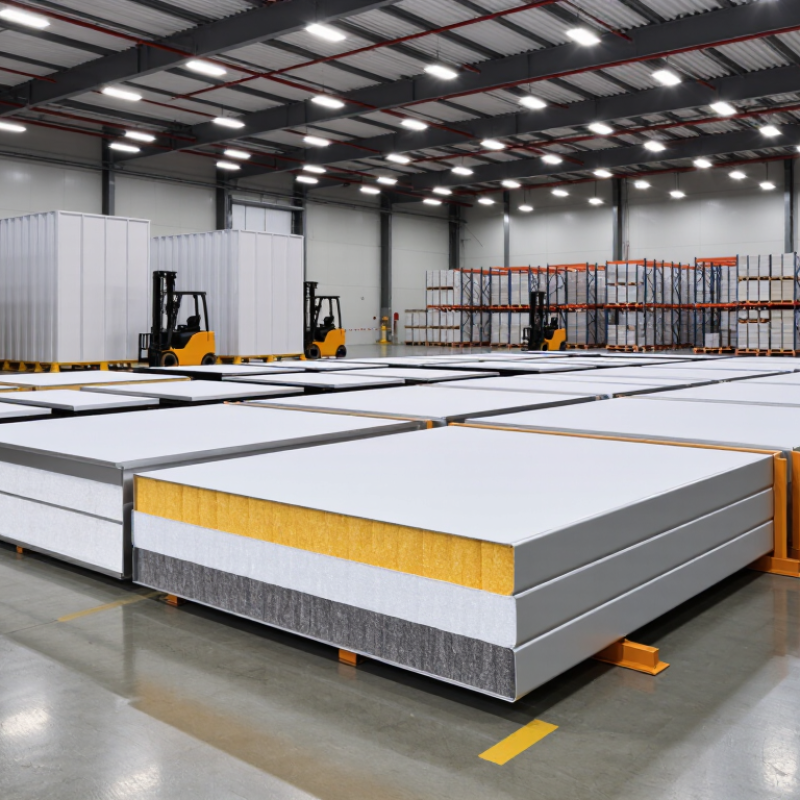
Sandwich composite panels are engineered building elements with two strong outer skins and a lightweight central core. The skins commonly use steel, aluminum, or fiber-reinforced sheets. The core may be mineral fiber, polyurethane foam, or expanded polystyrene. Together, these layers create a high stiffness-to-weight structure. Think of a filled biscuit, but built for walls, roofs, cold rooms, and partitions. The skins resist bending. The core separates them and improves insulation. It can also reduce sound transfer, although performance depends on density, joints, and installation quality. A panel is not simply insulation with metal. Its performance comes from the bonded system.
When evaluating suppliers in China, buyers should request tested values for thermal conductivity, fire behavior, compressive strength, and water absorption. Ask for core thickness, coating details, tolerance data, and production records. A 50-millimeter panel may suit an internal partition, while thicker panels may support temperature-controlled storage. Site conditions matter. Humid air, salt exposure, impact risk, and frequent washing can change the specification. Poorly sealed edges may allow moisture behind the skins. That mistake is easy to miss. In practice, drawings can look precise, while actual joints reveal gaps, uneven fasteners, or damaged coatings. Independent inspection and sample assembly can expose these problems before shipment. Test results still cannot replace local code review or qualified installation.
Key Materials and Panel Construction
China Top Sandwich Composite Panels Suppliers?
Key Materials and Panel Construction
Material selection determines whether a sandwich panel performs well beyond the factory gate. The UNEP 2023 Global Status Report states that buildings and construction consumed 34% of global energy and produced 37% of energy-related carbon emissions in 2022. That pressure makes thermal performance important, but insulation is only one part of the decision. Mineral wool offers strong fire resistance and acoustic absorption. Polyurethane and polyisocyanurate cores usually provide lower thermal conductivity with thinner profiles. Expanded polystyrene can reduce initial cost, yet its fire and moisture specifications require careful review. No core is perfect.
Panel construction also controls long-term reliability. A typical panel combines two coated steel facings, adhesive layers, and a rigid insulation core. Continuous bonding prevents voids, while accurate profiling improves joint alignment. EN 14509 provides a useful framework for factory-made, double-skin metal-faced panels, including performance testing and design requirements. Buyers should request declared thermal conductivity, density, fire classification, water absorption, and dimensional tolerances. These figures matter more than attractive catalog language.
The International Energy Agency reports that building operations account for about 30% of global final energy use. Better panels can reduce heating and cooling demand, but installation quality may weaken that benefit. Small gaps around fasteners can become cold bridges. I have seen specifications focus heavily on core thickness and overlook joint design. That is a costly blind spot. Supplier evaluations should examine production records, testing frequency, traceability, and technical support, not only price.
China Top Sandwich Composite Panels Suppliers? - Key Materials and Panel Construction
| Panel Construction |
Typical Core Material |
Typical Core Density |
Typical Thermal Conductivity |
Common Facing Materials |
Common Applications |
| Metal–EPS–Metal |
Expanded polystyrene foam |
Approximately 12–25 kg/m³ |
Approximately 0.035–0.040 W/m·K |
Pre-painted steel or aluminum |
General industrial buildings, warehouses, partitions, and temporary structures |
| Metal–PU/PIR–Metal |
Polyurethane or polyisocyanurate rigid foam |
Approximately 35–45 kg/m³ |
Approximately 0.020–0.026 W/m·K |
Coated steel, stainless steel, or aluminum |
Cold rooms, cleanrooms, food-processing facilities, and temperature-controlled buildings |
| Metal–Mineral Wool–Metal |
Rock wool or mineral fiber insulation |
Approximately 80–150 kg/m³ |
Approximately 0.035–0.045 W/m·K |
Pre-painted steel or stainless steel |
Fire-rated walls, industrial buildings, factories, and acoustic enclosures |
| Metal–Glass Wool–Metal |
Glass wool fiber insulation |
Approximately 48–96 kg/m³ |
Approximately 0.032–0.040 W/m·K |
Coated steel or aluminum |
Interior partitions, ceilings, commercial buildings, and acoustic applications |
| Metal–Phenolic Foam–Metal |
Phenolic rigid foam |
Approximately 35–60 kg/m³ |
Approximately 0.018–0.025 W/m·K |
Coated steel or aluminum |
High-performance thermal envelopes and projects requiring low smoke performance |
Panel Construction and Selection Notes:
Core performance varies with density, thickness, facing material, joints, and manufacturing process. Typical panel thicknesses range from approximately 30 to 200 mm. Interlocking tongue-and-groove or cam-lock joints improve air tightness and thermal continuity. Fire resistance, structural capacity, and U-value should be verified through project-specific testing and applicable standards.
| Key Specification |
Typical Range or Requirement |
Why It Matters |
| Panel thickness |
Approximately 30–200 mm |
Controls thermal resistance, weight, acoustic performance, and structural behavior |
| Metal facing thickness |
Commonly approximately 0. treinta–1.20 mm |
Affects impact resistance, spanning ability, corrosion protection, and appearance |
| Typical panel width |
Approximately 900–1,200 mm effective cover width |
Influences installation speed, joint quantity, and material optimization |
| Facing coatings |
Polyester, PVDF, plastisol, or metallic protective coatings |
Provides resistance to weathering, corrosion, ultraviolet exposure, and cleaning chemicals |
| Joint design |
Tongue-and-groove, concealed-fix, or cam-lock connection |
Affects air leakage, moisture control, thermal bridging, and installation quality |
| Quality verification |
Check dimensional tolerances, adhesion, density, thermal performance, fire classification, and coating thickness |
Confirms that panels meet the design, building-code, and service-life requirements |
Main Applications in China and Global Markets
China’s sandwich composite panel suppliers serve a wide range of construction needs. Their products appear in factories, warehouses, cold rooms, and logistics centers. In coastal regions, panels often face humidity and salt-laden air. Inland projects may require stronger thermal insulation against severe temperature changes.
Composite Cleanroom Panels
are widely used in pharmaceutical, medical, food-processing, and electronics facilities. Their smooth surfaces reduce dust collection and simplify daily cleaning. Designers usually examine core materials, fire performance, joint sealing, and panel thickness. A cleanroom wall is not only a panel. Installation quality matters just as much.
Global buyers often request panels for modular buildings, agricultural storage, and temperature-controlled transport hubs. Suppliers may provide customized dimensions, insulation levels, surface finishes, and connection systems. However, a low quotation can hide weak edge protection or limited technical support. This happens more often than expected. Project teams should review test reports, production consistency, packaging, and installation guidance before ordering. Local climate data also deserves attention. A panel suitable for a dry warehouse may perform poorly in a wet coastal facility. Specifications can look complete, yet site conditions may still expose gaps. Reliable cooperation depends on clear drawings, traceable materials, realistic delivery schedules, and practical after-sales communication.
How to Evaluate Chinese Panel Suppliers
China Top Sandwich Composite Panels Suppliers?
When evaluating Chinese panel suppliers, inspect more than catalog photos and quoted prices. Ask for core density, steel thickness, coating type, and dimensional tolerances. A reliable supplier should provide recent fire-resistance reports and production records. Request a physical sample, then check its edges, bonding, flatness, and surface finish under direct light. For Pharmaceutical Cleanroom Panels, examine joint design, cleanability, insulation performance, and resistance to frequent washing. Small gaps can become serious hygiene concerns.
A factory audit adds useful evidence. Review cutting equipment, adhesive storage, batch labeling, and quality inspection points. Confirm whether testing comes from an accredited laboratory, not only an internal document. Ask how damaged panels are replaced and how complaints are recorded. Delivery history also matters; repeated delays can disrupt installation crews and controlled environments. The lowest price may hide thinner facings or inconsistent core density. That assumption needs checking.
Tips: Compare three written quotations using identical specifications. Ask for a trial order before large production. Measure sample thickness yourself. Keep approved drawings and test reports in one file. Do not rely on promises alone. A supplier may appear highly organized during one visit, yet weak follow-up can still reveal gaps.
How to Evaluate Chinese Sandwich Composite Panel Suppliers
This procurement framework assigns the highest importance to product conformity, fire performance, and thermal performance. Buyers should verify technical documents against applicable requirements such as EN 14509, EN 13501-1, ASTM E84, and ISO 9001, while also checking quality traceability and export documentation.
The percentages represent recommended evaluation weights for supplier screening, not market share or data from any specific company or brand.
Leading Supplier Types and Manufacturing Capabilities
China’s top sandwich composite panel suppliers usually fall into three groups: integrated manufacturers, specialized fabricators, and trading companies. Integrated manufacturers produce metal skins, insulation cores, and finished panels under one roof. This setup can improve traceability and delivery control. Specialized fabricators often handle complex designs, such as curved panels, cold-room systems, or cleanroom partitions. Trading companies may offer broader sourcing options, but their factory visibility can be limited.
Manufacturing capability matters more than a polished catalog. Check whether the supplier tests core density, bonding strength, fire performance, and dimensional accuracy. Common core options include EPS, polyurethane, PIR, and rock wool. Automated foaming lines can improve consistency, while continuous lamination lines support stable panel thickness. Ask for production samples. Inspect the edge locks, coating surface, and joint fit. Small defects often appear there. No supplier is perfect. Even experienced factories may struggle with urgent custom orders or unusual color requirements.
Tips:
Request recent inspection records, not old certificates. Confirm the steel thickness after coating. Ask how rejected panels are handled. Compare laboratory data with actual samples. A reliable supplier should explain tolerances clearly and admit limitations. Delivery planning also deserves attention; port distance, packaging strength, and seasonal capacity can affect the final schedule.
Quality Standards, Certifications, and Testing
China Top Sandwich Composite Panels Suppliers? Quality Standards, Certifications, and Testing
Selecting a Chinese sandwich panel supplier requires more than comparing factory prices. ISO’s 2023 Survey recorded over 1.2 million ISO 9001 certificates worldwide, but certification alone cannot confirm panel performance. Request the current certificate, audited factory scope, and batch-level inspection records. Check whether the documented process covers core density, steel thickness, coating adhesion, dimensional tolerance, and joint fit.
For clean facilities, ask for Smooth Surface Cleanroom Panels with documented surface finish, sealed edges, and low particle-shedding construction. ISO 14644-1 evaluates airborne cleanliness through particle concentration, including particles from 0.1 micrometres upward. A responsible supplier should provide cleanroom test evidence, not only marketing photographs. Review thermal conductivity reports, water absorption results, and fire classifications under EN 13501-1 or ASTM E84, according to the project location.
Independent testing matters. The MarketsandMarkets 2024 report estimated the global sandwich panel market at about USD 13.9 billion in 2023, with continued growth expected through 2028. Rapid expansion can encourage rushed quality control. I would require samples from actual production batches and verify laboratory accreditation under ISO/IEC 17025. Factory visits can reveal details that certificates miss, such as uneven foam edges or compressed joint seals. One weakness remains: test results may represent ideal specimens, not installation-site conditions. Recheck fastening, panel alignment, temperature, and moisture control before acceptance.
Ordering, Pricing, and Export Considerations
China Top Sandwich Composite Panels Suppliers?
Ordering, Pricing, and Export Considerations
Buying sandwich composite panels from China requires more than comparing quotations. Start with the panel’s core, thickness, surface coating, fire performance, and thermal conductivity. For controlled environments, specify Heat-Insulated Cleanroom Panels with sealed joints, smooth finishes, and suitable corrosion resistance. Ask suppliers for recent test reports, production photos, and quality-control records. Factory experience matters, but documents should support every claim.
Request a detailed pro forma invoice before placing an order. It should show panel dimensions, accessories, packaging, lead time, minimum order quantity, and payment terms. Pricing changes with steel thickness, insulation density, color, and project volume. A cheap offer may exclude trims, fasteners, pallets, or loading fees. Check the difference between EXW, FOB, and CIF pricing carefully. Small details can alter the final cost.
Export planning also needs attention. Confirm the correct customs classification with a qualified broker, then review commercial invoices, packing lists, certificates, and shipping marks. Your destination may require specific fire, environmental, or building documentation. Inspect samples before mass production, and use independent inspection when the project is sensitive. I have seen buyers focus on price and regret ignoring joint tolerances. That mistake is avoidable. Still, even a well-planned order can face port delays or material changes, so keep written approvals and a practical schedule.
FAQS
Mineral wool offers strong fire resistance and sound absorption. Polyurethane and polyisocyanurate provide lower thermal conductivity. Expanded polystyrene may reduce initial cost. Review fire and moisture data carefully. No core is perfect.
A typical panel contains coated steel facings, adhesive layers, and a rigid insulation core. Continuous bonding helps prevent internal voids. Accurate profiling improves joint alignment. Poor joints can weaken good insulation.
Request thermal conductivity, core density, fire classification, water absorption, and dimensional tolerances. Ask for recent test reports and production records. Check whether an accredited laboratory issued the reports. Attractive catalog wording is not enough.
Common applications include factories, warehouses, cold rooms, logistics centers, and modular buildings. They also suit food-processing and temperature-controlled facilities. Clean surfaces help reduce dust collection. Installation still matters greatly.
Coastal projects need protection against humidity and salt-laden air. Inland buildings may need stronger insulation against extreme temperature changes. A dry-warehouse solution may fail in a wet coastal facility. Climate data deserves attention.
Examine the edges, bonding, thickness, flatness, and surface finish under direct light. Check joint design and edge protection. Measure thickness yourself. Small defects can become expensive later.
Review cutting equipment, adhesive storage, batch labeling, and inspection points. Confirm how materials remain traceable. Ask how damaged panels are replaced. Check complaint records and delivery history. One impressive visit proves little.
Compare at least three written quotations using identical specifications. Check steel thickness, coating type, core density, dimensions, and delivery schedules. Consider a trial order before large production. The lowest price may hide weaker materials. That assumption still needs checking.
Conclusion
Sandwich Composite Panels are engineered building materials made by bonding a lightweight insulating core between two protective outer skins. Common core materials include polyurethane, mineral wool, EPS, and PIR, while the facings may be steel, aluminum, or other durable sheets. Their combination of strength, thermal insulation, fire performance, and efficient installation makes them suitable for factories, warehouses, cold rooms, commercial buildings, agricultural facilities, and modular construction in China and international markets.
When evaluating Chinese suppliers, buyers should consider production capacity, technical expertise, customization options, material consistency, and experience with export projects. Reliable manufacturers typically provide quality-control records, product testing, and certifications related to fire resistance, thermal performance, structural strength, and environmental requirements. Ordering decisions should also account for panel specifications, minimum quantities, lead times, packaging, shipping methods, installation accessories, warranty terms, and total delivered cost. A careful comparison of supplier capabilities and documentation helps buyers select panels that meet project requirements while supporting safe, efficient, and cost-effective construction.