Leave Your Message
0%

When you're trying to pick the best prefab modular homes from China, it’s definitely more than just comparing online prices. You really want to look into a few key things like how long the company has been around, their engineering know-how, the quality of materials they use, and what kind of support they offer after the sale. Big names like K-HOME, DeepBlue SmartHouse, and GS Housing are pretty well-known in international markets, but honestly, reputation alone isn’t enough to make a solid choice.

Do your homework. A trustworthy supplier should give you clear drawings, structural calculations, fire safety documentation, and detailed schedules for delivery. If possible, visiting their factory can be super revealing—brochures only show part of the story. During visits, check things like welding quality, how well walls are insulated, window seals, plumbing layouts, and electrical protections. Also, ask if they've completed projects similar to yours—say, a coastal resort, worker housing, or family homes—since different projects need different solutions.

And don’t forget about good communication. Reliable companies will be upfront about what they can and can’t do, rather than promising the moon. They should also help you figure out local foundation requirements, transport stuff to your site, installation conditions, and ongoing maintenance needs. Using independent inspections, approving samples beforehand, and setting up staged payments can save you a lot of headaches down the road. While certifications can help you gauge a company's reliability, it's a smart move to verify what those certifications actually mean and if they’re legit.

Honestly, the cheapest quote isn’t usually the best choice. A low-ball price might cut corners on foundations, finishes, taxes, or on-site assembly. Sometimes, their website might even have outdated project info—that’s a red flag and worth asking questions about. This guide takes a practical look at top Chinese prefab modular home suppliers, considering aspects like how much they can produce, their ability to customize projects, quality control measures, the experience they've gathered on different types of projects, and their customer support. The goal isn’t to push one company over another blindly but to help you make a well-informed, realistic decision. Sure, mistakes can still happen, but doing your due diligence will save you money and trouble in the long run.
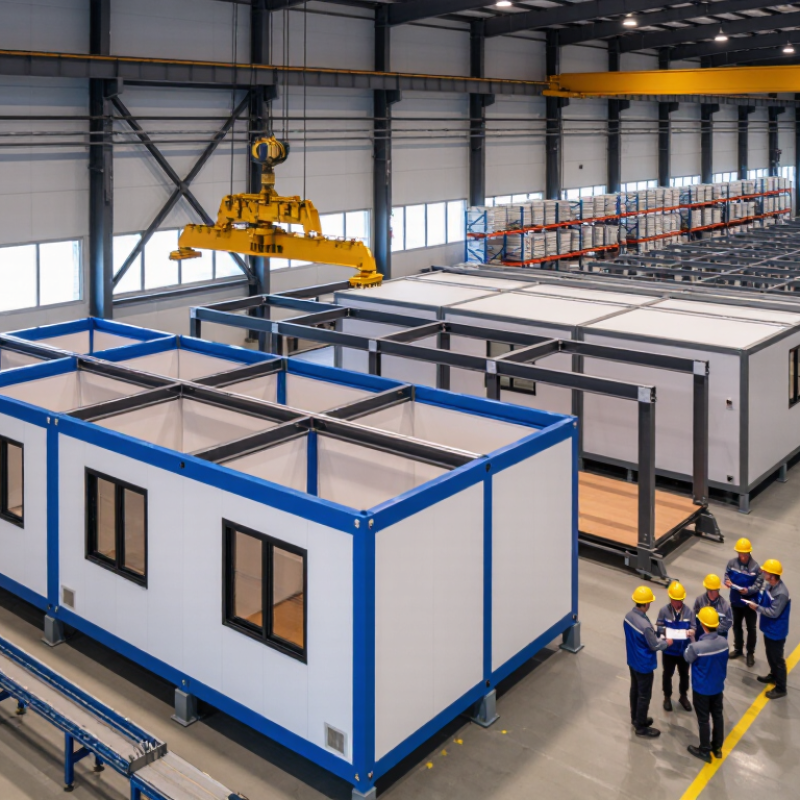
China Best Prefab Modular Homes Suppliers?

What Makes China a Leading Source of Prefab Modular Homes?

China has become a leading source of Modular Homes because its manufacturing network is broad, flexible, and highly organized. Factories can coordinate steel frames, wall panels, windows, plumbing, and interior fittings within one supply chain. This reduces waiting time and supports consistent production. Many suppliers also offer designs for coastal, cold, humid, or earthquake-prone regions. However, climate adaptation must be verified, not assumed.

Experienced buyers usually inspect welding points, insulation thickness, drainage details, and fire-rated materials. Factory quality checks may include dimensional testing, water resistance checks, and trial assembly. Export experience also matters. A reliable supplier should explain packing methods, loading plans, installation steps, and replacement procedures clearly. The process is not flawless. A low quotation can hide thinner materials, unclear specifications, or expensive site work.

Tips: Request material certificates and recent project photos. Ask for a detailed room-by-room specification. Confirm local building requirements before production. Compare the delivered cost, not only the factory price. Keep one approved sample panel for later inspection. Small details matter.

China’s advantage also comes from customization at scale. Buyers can adjust layouts, bathroom modules, window sizes, and energy systems without rebuilding the entire design. Digital drawings help reduce mistakes, yet drawings can still miss local foundation conditions. A professional survey remains necessary. Delivery speed may be impressive, but rushed approval creates avoidable problems. Careful communication, staged inspections, and realistic installation planning usually protect the project better than promises alone.

China Best Prefab Modular Homes Suppliers? What Makes China a Leading Source?

China’s prefab modular housing supply advantage is supported by large-scale manufacturing capacity, continued urbanization, strong research investment, and expanding prefabricated-building adoption.

Selected 2023 national indicators. The figures are contextual indicators rather than direct supplier rankings. Sources: China National Bureau of Statistics and Ministry of Housing and Urban-Rural Development of China.

These indicators help explain why China is competitive in prefab modular homes: a broad manufacturing base supports scalable production, urbanization sustains demand, R&D investment improves building systems, and prefabricated construction is becoming increasingly mainstream.

How to Define and Compare Modular Home Suppliers in China

China Best Prefab Modular Homes Suppliers?

Choosing modular home suppliers in China requires more than comparing quoted prices. Define each supplier by its actual capabilities: design support, structural engineering, factory control, export experience, and installation guidance. Ask for drawings showing wall thickness, steel grades, insulation layers, fire performance, and wind or snow-load calculations. Vague specifications create expensive problems later.

A reliable comparison should include a factory audit or independent inspection. Check welding areas, cutting equipment, moisture protection, packing methods, and material traceability. Request recent project references with similar climate, size, and shipping distance. Review production schedules, payment stages, warranty terms, spare-part support, and responsibility for damaged components. A professional supplier should explain which standards its design follows and provide test reports that match the offered materials.

Do not trust appearance alone.

In my experience, a clean showroom can hide weak process control. I once underestimated the importance of packaging details; small gaps around panels allowed moisture during transport. That mistake changed how I review container loading photos and sealing records. Suppliers should also answer difficult questions without rushing the buyer. Their responses may reveal more than a polished brochure. Still, no checklist is perfect. Local permits, foundation conditions, and installation skills can change the final result, so the contract must clearly divide technical responsibilities.

China Best Prefab Modular Homes Suppliers? - How to Define and Compare Modular Home Suppliers in China
Evaluation Dimension Suggested Weight What to Compare Reliable Evidence to Request Practical Benchmark or Decision Rule
Manufacturing Experience 10% Years producing modular or prefabricated buildings, completed project types, annual production capacity, and experience with export projects. Factory profile, production records, project references, dated site photographs, and independent factory-audit reports. Prefer suppliers that can demonstrate experience with projects similar in size, climate, building code, and installation method to the target project.
Factory Capability and Quality Control 15% Steel processing, welding, panel production, dimensional inspection, moisture control, traceability, and final quality inspection. Factory video or inspection visit, quality-control plan, inspection checklists, material traceability records, and non-conformance procedures. Production should include documented inspections at material receipt, structural assembly, enclosure installation, services installation, and final completion.
Structural Engineering 15% Structural system, design loads, wind and snow resistance, seismic requirements, foundation interface, transport loads, and connection details. Stamped structural calculations where required, engineering drawings, connection details, steel or timber specifications, and project-specific load assumptions. Do not approve a supplier based only on a standard catalogue design; structural design must be checked against the destination site and applicable building regulations.
Compliance with Destination Regulations 15% Building code, fire safety, energy performance, electrical requirements, plumbing requirements, accessibility, and local approval procedures. Code-compliance matrix, product certificates, test reports from recognized laboratories, drawings in the required format, and documents accepted by the local authority. Compliance is destination-specific. A Chinese or international product certificate alone does not automatically prove approval in the importing country.
Materials and Component Specifications 10% Structural steel grade, corrosion protection, insulation type and thickness, exterior cladding, windows, doors, roofing, flooring, and interior finishes. Material data sheets, mill certificates, coating specifications, insulation thermal data, sample panels, and approved finish schedules. Compare complete specifications rather than product names. Confirm thickness, density, fire rating, thermal performance, durability, and replacement availability.
Energy and Weather Performance 10% Thermal insulation, air tightness, condensation control, waterproofing, ventilation, solar exposure, humidity, and local climate suitability. U-value or R-value calculations, condensation analysis where necessary, roof and wall details, waterproofing method, and climate-specific recommendations. Design should be adapted to the actual climate zone. A wall or roof specification suitable for a mild climate may be inadequate in cold, hot, humid, coastal, or high-wind locations.
Customization and Design Support 8% Ability to modify layouts, dimensions, façade materials, kitchens, bathrooms, mechanical systems, accessibility features, and local utility connections. Design-development process, revision procedure, sample drawings, BIM or CAD capability, and a written list of included and excluded design services. Require a project-specific design freeze and revision-control process before production begins.
Production and Delivery Schedule 8% Engineering duration, sample approval, production sequence, packaging, port handling, shipping method, customs documentation, and site installation schedule. Milestone schedule, production plan, packing list template, shipping responsibilities, Incoterms® 2020 quotation, and delay-management provisions. Compare the complete door-to-door schedule, not only factory production time. Port congestion, customs clearance, foundation readiness, and local installation can affect the final completion date.
Installation and After-Sales Support 8% Installation instructions, supervisor availability, local labor training, commissioning, spare parts, warranty response, and defect resolution. Installation manual, method statements, training plan, warranty terms, service-response procedure, spare-parts list, and references from completed projects. Clarify whether the quoted price includes supervision, tools, lifting equipment, travel, commissioning, correction of defects, and post-installation support.
Commercial Transparency 6% Scope of supply, exclusions, payment milestones, tooling or design fees, packaging, inland transport, insurance, taxes, duties, installation, and change-order pricing. Itemized quotation, bill of quantities, contract draft, payment schedule, Incoterms® 2020 term, and written assumptions. Use identical drawings and specifications when requesting quotations. The lowest initial price may not be the lowest total delivered and installed cost.
Financial and Contractual Risk 5% Payment security, production ownership, refund conditions, performance obligations, inspection rights, liquidated damages, dispute resolution, and export documentation. Business registration information, bank-account verification, contract review, inspection rights, payment-protection arrangements, and clearly defined acceptance criteria. Link payments to verifiable milestones. Avoid making the final payment before inspection, document delivery, and resolution of agreed defects.
Total Cost of Ownership 10% Product price, engineering, packaging, inland transport, sea freight, insurance, customs, duties, foundations, cranes, local labor, utility connections, maintenance, and replacement parts. Delivered-cost model, logistics quotation, installation budget, maintenance schedule, lifecycle assumptions, and clearly stated exclusions. Rank suppliers using comparable total project cost and performance, not factory price alone.

Key Types of Prefab Modular Homes Available from Chinese Suppliers

China Best Prefab Modular Homes Suppliers?

Chinese suppliers offer several practical types of prefab modular homes for different budgets, climates, and installation conditions. Light steel modular homes use galvanized frames, insulated wall panels, and factory-fitted windows. They suit worker housing, family extensions, and small offices. Their strength is consistent production. However, insulation performance depends heavily on panel thickness and local weather design.

Modular Container Homes convert steel shipping-style units into compact living spaces. They are useful for temporary accommodation, remote sites, and rental cabins. Expandable homes provide another option. Their folded structure can open into a larger room after delivery, reducing transport costs. Flat-pack homes use numbered wall panels and bolted frames. They are easier to move, but assembly quality matters. A small alignment error can cause leaks around doors or roof joints. No type is perfect.

Tips: Ask for structural drawings, material specifications, fire ratings, and installation instructions before ordering. Request factory inspection records and sample testing where possible. Check wind, snow, humidity, and seismic requirements for the destination. Compare the complete cost, including transport, foundation work, plumbing, electrical systems, and local installation. Photos can mislead. A model house may look excellent, yet its hidden insulation or drainage details remain unclear. Leave room for professional review.

Essential Standards for Assessing Quality, Safety, and Durability

Choosing among China’s best prefab modular home suppliers requires more than comparing prices or glossy photographs. Quality starts with traceable materials, accurate engineering, and disciplined factory control. Ask for steel grades, insulation density, coating thickness, and welding inspection records. Galvanized frames should show consistent coverage, especially around cut edges and joints. Small gaps can become serious corrosion points.

Safety must match the home’s destination. Confirm structural calculations for local wind, snow, seismic, and foundation conditions. Electrical systems should follow the applicable national standards, with tested breakers, grounding, smoke alarms, and fire-resistant materials. Request fire-rating reports from accredited laboratories, not informal test sheets. An independent inspection before shipment can reveal loose fasteners, damaged panels, or moisture inside wall sections. It costs money. It may prevent a larger loss.

Durability depends on details users rarely see. Check roof drainage, window flashing, floor loading, vapor control, and thermal bridges around doors. Ask how replacement parts are identified after several years. Suppliers with clear drawings, batch records, installation manuals, and responsive technical support are easier to trust. Factory experience matters, but it should be supported by evidence. One overlooked weakness is condensation; even a strong frame can fail when ventilation and insulation are poorly coordinated. I would also leave room for doubt. Samples may perform well while later batches vary, so staged inspections and documented acceptance criteria remain necessary.

How to Evaluate Pricing, Customization, and Production Capacity

China Best Prefab Modular Homes Suppliers?

When comparing Chinese prefab modular home suppliers, begin with a detailed, comparable quotation. Request separate prices for the frame, insulation, windows, plumbing, electrical systems, transport, and installation. A low headline price may exclude foundations, local permits, or site preparation. Ask whether the quote covers factory testing and export packaging. Real project experience matters here.

Customization should be measured, not promised. Request approved drawings, wall-section details, material samples, and a clear revision limit. For Container Homes, check condensation control, thermal insulation, corrosion protection, and floor loading. A supplier should explain how changes affect cost and production time. I have learned that attractive renderings can hide difficult maintenance decisions. Not always.

Production capacity needs evidence. Ask for monthly output, current orders, equipment lists, inspection records, and recent delivery schedules. A factory producing many units may still lack space for your project. Review welding quality, coating thickness, moisture protection, and final inspection procedures through independent checks when possible. Speak with previous buyers, but verify their claims with dated documents. Factory visits help, although one visit cannot prove consistent quality. Build payment milestones around drawings, material approval, completed production, and pre-shipment inspection. Allow contingency time. Delays happen.

Shipping, Installation, and After-Sales Support for Overseas Buyers

China Best Prefab Modular Homes Suppliers?

For overseas buyers, shipping is more than placing modules on a vessel. A reliable supplier should provide accurate dimensions, packing lists, loading photos, and export documents. Container House Prefab Kits need careful protection against moisture, impact, and shifting during transport. Ask for the loading plan before production starts. It can reveal weak packaging or unexpected freight costs.

Installation support should match your local conditions. Clear assembly drawings, numbered parts, and video guidance can reduce delays on site. Experienced suppliers may also offer remote support through live calls. However, local contractors must check foundations, utilities, safety requirements, and building rules. A factory cannot understand every regional condition. That limitation matters.

After-sales service shows a supplier’s real reliability. Request a written warranty, spare-parts procedure, response timeline, and named service contact. Some suppliers answer quickly before payment, then become slow later. This happens. Keep every specification and conversation in writing. A useful supplier will review installation photos and help identify problems, even when the cause is uncertain. Buyers should also inspect goods at delivery and record damage immediately. Small details often protect a large investment.

FAQS

What should define a reliable modular home supplier?

Review design support, structural engineering, factory control, export experience, and installation guidance. Ask for detailed drawings. Evidence matters more than polished photos.

Which technical documents should buyers request?

Request wall thickness, steel grades, insulation layers, fire ratings, and wind or snow-load calculations. Also review electrical layouts, foundation requirements, and material test reports. Vague specifications create expensive surprises.

How can buyers check factory quality?

Arrange a factory audit or independent inspection before shipment. Inspect welding areas, cutting equipment, coating coverage, and moisture protection. Check material labels and batch records. A clean showroom proves little.

What should a comparable quotation include?

Request separate prices for frames, insulation, windows, plumbing, electrical systems, transport, and installation. Confirm whether foundations, permits, site preparation, testing, and export packaging are included. Low prices may hide missing work.

How should customization be evaluated?

Ask for approved drawings, wall-section details, material samples, and revision limits. Require written explanations for changes in price and production time. Renderings can look perfect. Maintenance may tell another story.

How can buyers assess structural safety?

Confirm calculations for local wind, snow, seismic activity, and foundation conditions. Check tested breakers, grounding, smoke alarms, and fire-resistant materials. Fire reports should come from accredited laboratories. Informal sheets are weak evidence.

What details affect long-term durability?

Examine roof drainage, window flashing, floor loading, vapor control, and thermal bridges near doors. Ask how replacement parts will be identified years later. Poor ventilation can cause condensation inside walls. Strong frames still fail.

How should production capacity and delivery risk be checked?

Request monthly output, current orders, equipment lists, inspection records, and recent delivery schedules. Review container loading photos, sealing records, and packing methods. Set payment milestones for drawings, materials, production, and pre-shipment inspection. Delays happen. Allow contingency time.

Who should handle damaged components and installation problems?

The contract should assign responsibility for transport damage, foundations, permits, installation, and technical changes. Include warranty terms, spare-part support, acceptance criteria, and response times. Previous projects help, but verify their documents. One visit cannot prove consistency.

Conclusion

China has become a leading source of Prefab Modular Homes because of its extensive manufacturing capabilities, flexible supply chains, competitive production costs, and experience serving international markets. Buyers should compare suppliers by reviewing factory qualifications, engineering expertise, project experience, communication standards, and their ability to provide reliable documentation. Available solutions may include container-style units, steel-frame modules, expandable homes, flat-pack buildings, and customized residential or commercial structures.

When assessing a supplier, overseas buyers should examine material quality, structural safety, insulation, fire resistance, weather durability, and compliance with applicable building requirements. Pricing should be evaluated together with customization options, production capacity, lead times, and quality-control procedures rather than by quotation alone. Shipping plans, packaging, site preparation, installation guidance, spare parts, warranties, and after-sales support are also essential considerations. A dependable supplier should offer clear contracts, transparent costs, practical technical assistance, and coordinated delivery from factory production to final installation.


Oliver

Oliver

Oliver is a dedicated marketing professional with a deep understanding of the construction industry's evolving landscape. With a strong focus on "standardization, modularization, and generalization," he plays a pivotal role in promoting the company's comprehensive temporary construction solution......
Previous What Are Container Homes and How Much Do They Cost?