Leave Your Message
0%

If you're looking into the top players in China’s interior decorative panel market, this guide is pretty handy. It gives you a straightforward overview of some of the leading manufacturers that serve everything from homes and offices to hotels and modular buildings. The market is pretty diverse—some suppliers specialize in wood-based wall panels, while others focus on fire-rated boards, acoustic surfaces, or moisture-resistant decorative sheets. In this guide, I’ve looked at their product ranges, manufacturing experience, quality systems, export capabilities, options for customization, and how good their after-sales support is.

You might come across names like KAPOK, LAMINAM China, MUXI, or Zhejiang Yuhua Timber Industry during your research—depending on what exactly you're after. But honestly, size isn’t everything when it comes to choosing a supplier. Things like samples, technical data, certifications, edge finishing, color consistency, and how well the packaging protects the product are just as important. Tiny details really do matter—an damaged corner, for instance, can delay an entire project, so it’s worth paying attention.

When I picked these companies, I based my choices on solid evidence—public info, product documentation, industry experience, and how they compare according to buyer-friendly criteria. Keep in mind, "Interior Decorative Panel" covers a lot of different materials, so comparing them directly isn’t always perfect. Like, a moisture-proof panel for a bathroom isn’t the same as an acoustic panel meant for an office, so you really need to review those differences carefully.

The article also touches on applications like container homes, where things like lightweight construction, quick setup, dimensional stability, and low maintenance are massive priorities. Sometimes, you’ll need to verify supplier claims independently—that’s totally normal. Before placing an order, it’s smart to ask for current test reports, sample approvals, photos of production, and clear warranty details. Good sourcing isn’t always easy—it comes with asking questions, giving feedback, and being honest about what’s working or not. In the end, it’s all about doing your homework and staying proactive in the process.
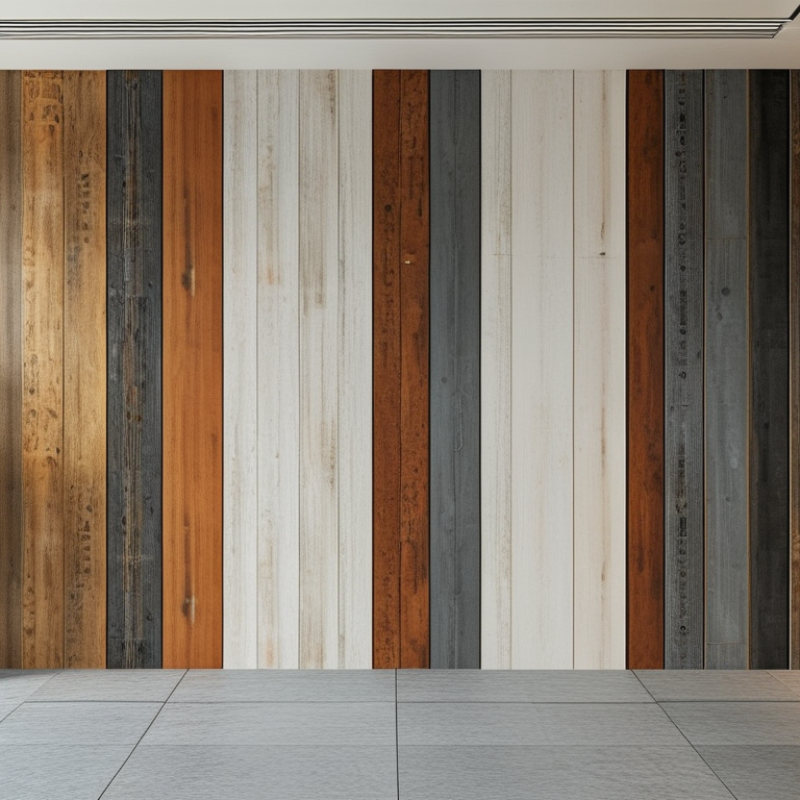
China Top 10 Interior Decorative Panel Suppliers

China’s Decorative Panel Industry: 2024 Output, Export, and Demand Data

China’s decorative panel market sits inside a much larger wood-based panel industry. The China Forestry Industry Association reported approximately 330 million cubic meters of wood-based panels in 2024. This includes plywood, fiberboard, particleboard, and related products. Decorative surface panels represent only part of this volume. Official statistics do not always separate them clearly.

China Customs data indicate continued overseas demand for plywood, fiberboard, and particleboard products in 2024. Combined exports remained in the multi-million-tonne range, although monthly volumes changed with freight rates and housing demand. Export buyers increasingly requested low-formaldehyde boards, moisture resistance, and stable surface finishes. These details affect procurement more than catalogue appearance.

Domestic demand was less predictable. National Bureau of Statistics data showed China’s real estate development investment fell 10.6% in 2024, while new housing starts declined sharply. Renovation projects offered some support, especially for kitchens, offices, hotels, and rental interiors. The data are not perfectly clean. Customs classifications overlap, and “decorative panel” has no single statistical code. Buyers should verify thickness, density, emissions, fire performance, and batch consistency before comparing suppliers. Rockwool Sandwich Panel Testing can also be relevant for composite interior systems, particularly where insulation and fire resistance are specified. A polished sample is not enough. Factory records still matter.

Top-10 Ranking Method: Capacity, Certification, Lead Time, and Export Share

China Top 10 Interior Decorative Panel Suppliers

Ranking China’s top 10 interior decorative panel suppliers requires more than comparing catalogues. The method should measure production capacity, certification, lead time, and export share. Capacity receives attention because large projects need stable monthly output, not impressive showroom samples. Auditors should check machinery, shift records, storage areas, and recent delivery volumes.

Certification is judged through valid documents, testing scope, and product consistency. A supplier offering Hospital Rockwool Sandwich Panel should provide fire-performance reports, density data, and clear factory traceability. Generic certificates are not enough. Lead time is measured from approved drawings to dispatch, including sample approval and packaging preparation. Ten-day promises can become thirty days when materials are unavailable.

Export share helps reveal experience with international packaging, customs paperwork, and quality expectations. However, export percentages are often self-reported. That weakness should be recorded, not hidden. A practical ranking combines verified records with weighted scores, rather than trusting one impressive number. Capacity may receive 30 percent, certification 30 percent, lead time 25 percent, and export share 15 percent. The balance is debatable. Some buyers may value technical compliance more than volume. Rechecking suppliers every six months also matters, because equipment, staff, and delivery performance can change quickly.

Panel Types and Applications: MDF, HPL, SPC, Acoustic, and Fire-Rated Boards

China’s leading interior decorative panel suppliers serve residential, hospitality, retail, and commercial projects. Their strongest catalogs usually include MDF, HPL, SPC, acoustic panels, and fire-rated boards. Each material solves a different site problem. MDF offers a smooth, machinable core for wardrobes, wall cladding, and painted furniture. It needs sealed edges in humid rooms. HPL withstands frequent contact on counters, doors, and elevator surrounds. Its decorative surface resists scratches, but poor substrate preparation can expose visible joints.

SPC panels suit moisture-prone walls and floors because their rigid mineral core resists swelling. Installers still need level surfaces and controlled expansion gaps. Acoustic panels combine felt, perforation, or slatted wood with sound-absorbing backing. They work well in meeting rooms, classrooms, cinemas, and open offices. Placement matters more than appearance alone. A beautiful panel behind a hard ceiling may improve little.

Fire-rated boards are specified for corridors, stair enclosures, kitchens, and public interiors. Buyers should verify test standards, thickness, edge treatment, and installation conditions. A certificate without matching the installed assembly is not enough. For Sandwich Panel House Construction, interior boards must coordinate with insulation, joints, moisture control, and fire performance. Supplier evaluation should include quality records, sample testing, production consistency, and technical support. Samples can mislead when lighting, batch color, and fixing methods change. Request full-size mock-ups. They reveal problems early.

China Top 10 Interior Decorative Panel Suppliers - Panel Types and Applications: MDF, HPL, SPC, Acoustic, and Fire-Rated Boards

Anonymized supplier capability comparison based on commonly available China-made interior panel specifications

No. Supplier Profile Primary Panel Type Typical Core or Composition Common Thickness Standard or Common Sheet Size Typical Applications Key Performance Characteristics Common Technical References Suitable Buyer Requirements
1 Supplier Profile 01 Melamine-Faced MDF Medium-density fiberboard with melamine-impregnated decorative paper on one or both faces 6–25 mm 1220 × 2440 mm; 1220 × 2745 mm; custom cutting available WardrobesOffice furnitureWall panelsRetail fixtures Smooth surface, consistent machining quality, broad color selection, suitable for CNC routing and edge banding EN 622-5; EN 14322; CARB Phase 2 or equivalent emission requirements where specified Furniture manufacturers, interior contractors, residential fit-out projects
2 Supplier Profile 02 HPL Decorative Panel Decorative high-pressure laminate bonded to MDF, particleboard, plywood, or compact laminate core 0.7–1.2 mm laminate surface; 6–25 mm finished panel 1220 × 2440 mm; 1300 × 3050 mm for selected laminate formats CountertopsDoorsPartitionsCommercial interiors High resistance to abrasion, impact, stains, and moderate heat; decorative wood, stone, solid-color, and metallic finishes EN 438; ISO 4586; project-specific fire and wear testing Hotels, hospitals, schools, retail stores, and high-traffic public spaces
3 Supplier Profile 03 SPC Wall and Ceiling Panel Rigid stone-plastic composite, generally based on calcium carbonate filler and PVC resin with a printed or decorative surface layer 3–10 mm 1220 × 2440 mm; 1220 × 2800 mm; profile and interlocking formats also available Wet areasBathroomsKitchensFeature walls Water-resistant, dimensionally stable, easy to clean, low-maintenance, and suitable for rapid installation over prepared substrates ASTM F3261 or applicable flooring/wall-panel test methods; formaldehyde and fire results must be project verified Renovation projects, hospitality interiors, prefabricated buildings, and moisture-prone rooms
4 Supplier Profile 04 PET Acoustic Panel Recycled or virgin polyester fiber, commonly thermoformed into rigid felt panels with optional printed, grooved, or laminated faces 9–25 mm 1220 × 2440 mm; 1220 × 2800 mm; baffles and clouds in custom dimensions Open officesMeeting roomsRestaurantsAuditoriums Sound absorption depends on thickness, spacing, mounting method, and room geometry; lightweight and easy to fabricate ISO 354; ASTM C423; ISO 11654; fire classification must be confirmed for the selected composition Architectural acoustic treatment, ceiling rafts, wall absorption, and decorative room zoning
5 Supplier Profile 05 Perforated Acoustic MDF Decorative MDF panel with regular perforations or slots and an absorptive mineral wool or polyester backing 9–18 mm panel; 25–50 mm acoustic backing commonly used 600 × 2400 mm; 1200 × 2400 mm; modular ceiling and wall formats AuditoriumsMusic roomsCorporate interiorsLibraries Combines wood appearance with controlled sound absorption; perforation ratio and cavity depth affect acoustic performance ISO 354; ISO 11654; EN 13986 for wood-based panels where applicable Projects requiring coordinated decorative wood finishes and acoustic treatment
6 Supplier Profile 06 Fire-Rated MDF or FR Wood Panel Flame-retardant MDF or engineered wood board manufactured with fire-modified fibers and a controlled resin system 6–25 mm 1220 × 2440 mm; 1220 × 2745 mm; project-specific formats Wall claddingDoorsPublic buildingsTransport interiors Reduced flame spread compared with standard MDF; actual fire behavior depends on thickness, finish, joints, and installation system EN 13501-1; ASTM E84; EN 13986; local building-code testing required for final classification Commercial interiors where a decorative wood-based surface and documented fire performance are required
7 Supplier Profile 07 Calcium Silicate Fire-Rated Board Hydrated calcium silicate, silica, cellulose fiber, and mineral reinforcement formed into a rigid non-combustible board 6–12 mm for decorative lining; 8–20 mm for construction applications 1220 × 2440 mm; 1200 × 2400 mm Fire-rated partitionsShaft wallsCeiling systemsService enclosures Non-combustible mineral substrate, moisture tolerance, dimensional stability, and compatibility with paint or decorative laminates EN 13501-1; ASTM E136; ASTM E119 or EN 1364 for tested assemblies Fire-compartment construction, commercial buildings, industrial interiors, and MEP protection
8 Supplier Profile 08 Magnesium Oxide Board Magnesium oxide cement reinforced with fiberglass mesh, perlite, wood fiber, or other mineral fillers depending on formulation 6–20 mm 1220 × 2440 mm; 1200 × 2400 mm PartitionsCeilingsWall backingFire protection Good fire resistance and stiffness; moisture behavior, chloride content, and dimensional stability must be checked before specification ASTM E136; ASTM E119; EN 13501-1; product-specific moisture and corrosion testing Projects needing a mineral-based board with fire performance and relatively simple site processing
9 Supplier Profile 09 Compact HPL Solid Panel Multiple layers of kraft paper impregnated with thermosetting resin and compressed into a self-supporting laminate panel 3–20 mm 1220 × 2440 mm; 1300 × 3050 mm; compact-panel custom cutting Toilet cubiclesLockersLaboratory furnitureWet-area partitions High impact resistance, low water absorption, hygienic surface, and no requirement for a separate substrate in many partition systems EN 438; ISO 4586; project-specific reaction-to-fire and slip-resistance tests Schools, hospitals, airports, sports facilities, and high-use wet environments
10 Supplier Profile 10 Mineral Wool Acoustic Decorative Board Mineral wool or rock wool core with a factory-applied painted, fleece, textile, or microperforated decorative surface 15–40 mm 600 × 600 mm; 600 × 1200 mm; 1200 × 2400 mm wall-panel formats Suspended ceilingsConference roomsClassroomsTransport hubs High sound absorption, good fire resistance for suitable mineral compositions, and compatibility with exposed-grid or concealed mounting systems ISO 354; ISO 11654; EN 13501-1; ASTM C423; ASTM E1264 where applicable Large commercial spaces requiring both reverberation control and documented fire performance

Specification note: Thickness, sheet size, emissions, acoustic rating, moisture resistance, and fire classification vary by construction, surface finish, adhesive, and installation method. Final project compliance should be confirmed with current test reports and the applicable local building code.

Emission Compliance: GB/T 39600-2021 E1 ≤0.124 mg/m³ and ENF ≤0.025

When comparing China’s top ten interior decorative panel suppliers, emission data deserves close attention. GB/T 39600-2021 defines E1 at ≤0.124 mg/m³ and ENF at ≤0.025 mg/m³. These limits apply to formaldehyde released inside a controlled test chamber. They are not simple factory-room readings.

The difference is substantial. ENF allows only one-fifth of the E1 limit. A supplier claiming ENF performance should provide chamber-test reports, production-batch details, and sample identification. Look for testing under GB/T 39600-2021, not only older perforator or dryer methods. The World Health Organization’s Indoor Air Quality: Selected Pollutants report recommends 0.1 mg/m³ for formaldehyde exposure. That benchmark sits below China’s E1 ceiling, so “E1 compliant” does not automatically mean low exposure in every room.

Installation still matters. A newly renovated bedroom with closed windows can accumulate emissions from panels, adhesives, flooring, and furniture together. The U.S. EPA’s TSCA Title VI technical requirements also emphasize composite-wood emission testing and certification. Ask suppliers about edge sealing, moisture control, and testing after surface treatment. Real projects can differ.

Claims need verification. A single laboratory sample may not represent every batch. That is an uncomfortable point. Procurement teams should request recent reports, inspect factory quality records, and retest high-volume orders independently. Low-emission panels reduce risk, but ventilation and total material loading remain practical variables.

Technical Comparison: 3–25 mm Thickness, Density, Moisture, and Fire Ratings

China’s top interior decorative panel suppliers often offer boards from 3 to 25 mm thick. Thickness affects impact resistance, weight, cutting accuracy, and installation cost. A 3 mm panel suits wall cladding and curved surfaces. Panels around 8–12 mm feel more stable beside doors or busy corridors. Thicker boards can hide uneven substrates, but they demand stronger fixings.

Density must match the project, not just the quotation. Higher-density boards usually resist dents better, while lightweight cores reduce transport loads. Moisture performance also varies. In a humid room, inspect water absorption, edge sealing, and dimensional change after exposure. A dry showroom sample proves little. For fire-sensitive interiors, request tested reaction-to-fire data, smoke information, and the complete assembly details. An Insulated Rockwool Sandwich Panel may provide strong thermal and fire performance, but its core, joints, and surface layers must be assessed together.

Tips: Ask for test reports, production samples, and batch specifications. Compare density in kg/m³, not vague terms such as “premium grade.” Check the declared thickness with a caliper. Small errors matter at door frames. Also confirm whether moisture and fire ratings apply to the panel alone or the installed system. This distinction is easy to miss. One more practical check: review cutting dust, edge strength, and colour consistency before approving a large order. Suppliers should explain limitations clearly; confident claims without test conditions deserve a second look.

Top-10 Supplier Profiles: Factory Scale, Product Lines, Certifications, and Markets

China Top 10 Interior Decorative Panel Suppliers

This profile-based review examines ten Chinese suppliers through factory scale, product depth, certifications, and export markets. Factory size matters, but it can mislead. A large workshop does not always provide better consistency. Buyers should inspect pressing lines, sanding equipment, sample rooms, and warehouse controls. Some suppliers operate multiple production lines, while others focus on flexible, mid-volume orders.

Their product ranges commonly include melamine panels, natural veneer boards, acoustic panels, fire-rated panels, and moisture-resistant decorative surfaces. More specialized factories offer matching edge bands, custom textures, and coordinated wall systems. Ask for recent batch samples. Printed color cards can hide surface differences. That mistake happens often. Technical teams should also review core density, formaldehyde test results, abrasion resistance, and dimensional stability.

Certification evidence separates experienced exporters from less prepared suppliers. Strong profiles may hold ISO 9001 for quality management, ISO 14001 for environmental systems, FSC chain-of-custody certification, or recognized indoor-air-quality approvals. Verification remains essential. Certificates should match the legal manufacturing entity and current production site. Export markets often include Europe, North America, Southeast Asia, Australia, and the Middle East, with different fire, emissions, and labeling expectations. A supplier serving hotels may understand project scheduling better than one focused on retail sheets. Still, delivery records and corrective-action reports deserve more attention than sales claims. There is no perfect supplier profile.

Procurement Metrics: MOQ, Lead Time, Warranty, Test Reports, and Total Cost

China Top 10 Interior Decorative Panel Suppliers

Procurement Metrics: MOQ, Lead Time, Warranty, Test Reports, and Total Cost

Comparing China’s top ten interior decorative panel suppliers requires more than checking unit prices. Ask each supplier for its MOQ, sample policy, production capacity, and realistic lead time. A quoted 15-day delivery may exclude design approval, tooling, inspection, and port handling. Request a written timeline with milestone dates. Small projects often suffer from high MOQs, while custom colors may require several hundred sheets.

Examine warranty terms carefully. Confirm coverage for delamination, color fading, moisture damage, and edge defects. A five-year warranty means little without a claims process, response period, and replacement conditions. Request current test reports for fire performance, formaldehyde emissions, moisture resistance, and surface durability. Check whether the report matches the exact panel structure and production batch. Old reports can mislead.

Calculate total cost per installed square meter. Include panels, packaging, inland transport, testing, customs, waste, installation, and possible rework. A low factory price may become expensive after 8% cutting waste and damaged-corner replacements. I have found that suppliers sometimes provide incomplete cost sheets. That is worth challenging. Keep a comparison table with identical specifications, quantities, delivery terms, and payment conditions. Request a physical sample before approval. Even then, color differences under showroom lighting can remain an uncomfortable risk.

Magnesium Oxysulfate Clean Panel: Benefits, Applications, and Selection Guide

Magnesium oxysulfate clean panels combine hygienic design, fire performance, and practical installation flexibility for controlled environments. The panels are available in 50, 75, and 100 mm wall thicknesses, with widths from 100 to 1,180 mm and recommended wall lengths up to 4,000 mm. A heat-transfer coefficient of 0.049 W/m·K supports thermal control, while pre-built wiring ducts help reduce installation time and protect service routes. With an A1-level fire rating and a stated fire-resistance limit of 1.2 hours for 50 mm panels, they are suited to projects where safety and cleanability are essential.

The International Energy Agency reports that buildings account for approximately 30% of global final energy consumption, making efficient envelope materials increasingly important in facility design. These panels can be applied to cleanrooms, laboratories, food-processing areas, healthcare spaces, and industrial interiors. They are compatible with machine-made boards and slabs, and their bending load capacity reaches 2.82 kN/m². Suspended ceiling panels can reach up to 3,000 mm in length, while sheet options include 950, 980, 1,150, and 1,180 mm widths.

Selection should consider room dimensions, service access, ceiling spans, fire strategy, and expected mechanical loads. For high-traffic or tightly regulated environments, verify the required fire classification, joint treatment, surface finish, and installation tolerances through project-specific testing and compliance documentation.

FAQS

: What does the E1 emission limit mean?

: E1 allows formaldehyde emissions up to 0.124 mg/m³ in a controlled test chamber. It is not a factory-room reading. Room conditions differ.

How does ENF compare with E1?

ENF permits up to 0.025 mg/m³, about one-fifth of the E1 limit. Suppliers should provide chamber-test reports, batch details, and sample identification.

Does E1 compliance guarantee low indoor exposure?

No. A closed bedroom may receive emissions from panels, flooring, furniture, and adhesives together. Ventilation matters. Total material loading matters too.

Which test information should buyers request?

Request recent tests using GB/T 39600-2021 chamber methods. Ask whether testing occurred after surface treatment. Older test methods may not show the same result.

Why should buyers inspect more than factory size?

A large workshop may still have inconsistent production. Inspect pressing lines, sanding equipment, warehouses, and sample rooms. Size can mislead.

What products may interior panel suppliers offer?

Common options include melamine panels, veneer boards, acoustic panels, fire-rated panels, and moisture-resistant surfaces. Some factories also provide matching edge bands and wall systems.

How can buyers compare panel quality accurately?

Request recent batch samples, not only printed color cards. Review core density, abrasion resistance, dimensional stability, and emission results. Color cards can hide differences.

How should certificates and export experience be checked?

Confirm that certificates match the legal manufacturer and current production site. Review delivery records and corrective-action reports. Sales claims are not enough.

Should high-volume orders receive independent testing?

Yes, especially when one laboratory sample represents an entire production batch. Retesting may reveal variation. That is uncomfortable, but useful.

What practical details should be discussed before installation?

Ask about edge sealing, moisture control, ventilation, surface treatment, and installation timing. A compliant panel can still perform poorly in a damp, closed room.

Conclusion

This guide presents a practical overview of China’s Interior Decorative Panel industry, focusing on 2024 production, export activity, and market demand. It explains how the top ten suppliers are assessed through manufacturing capacity, product consistency, certifications, delivery performance, and export experience. The article also compares major panel categories, including MDF, HPL, SPC, acoustic panels, and fire-rated boards, showing their typical applications in residential, commercial, hospitality, and public projects.

Special attention is given to emission compliance, including GB/T 39600-2021 E1 and ENF requirements, as well as technical factors such as 3–25 mm thickness, density, moisture resistance, and fire ratings. Each supplier profile covers factory scale, product range, certifications, and target markets. For purchasing teams, the guide summarizes essential evaluation points, including MOQ, lead time, warranty terms, test reports, quality control, and total cost, helping buyers select reliable solutions for different project requirements.

Isabella

Isabella

Isabella is a dedicated professional marketing specialist with a profound expertise in the realm of temporary construction solutions. With a strong focus on standardization, modularization, and generalization, she plays a pivotal role in promoting the company's comprehensive service platform that......
Previous 2026 How to Choose the Best Steel Building Materials?