Leave Your Message
Request a Quote
0%

Cleanroom doors actually play a pretty crucial role when it comes to keeping those tightly controlled environments in factories up and running smoothly. I heard from a report by Research and Markets that the cleanroom tech market is expected to hit about 4.5 billion USD by 2025. Wow, talk about growth! This surge really shows how much industries—especially pharma and biotech—are pushing for stricter contamination control. It’s all about safety, really.

But here’s the thing: getting that China CE certification for cleanroom doors isn’t exactly a walk in the park. A lot of manufacturers tend to underestimate just how tight the requirements actually are. If you don’t fully understand the process, it can drag out, causing delays you really don’t want. You’ve gotta have all the right paperwork in order and make sure everything lines up with Chinese standards. There’s also still a lot of concern out there about whether the products are truly safe and effective—that’s a real headache for many.

In a market that’s pretty cutthroat, having certified cleanroom doors can really give your company a leg up and make you seem more trustworthy. But getting to that point isn’t always easy. You’ve got to stay on top of the latest changes in regulations and be ready to adapt quickly. The rules are always shifting, which can mean timeline delays and extra costs—totally frustrating. Staying proactive is key, but honestly, a lot of folks tend to overlook this part, which can mean missed chances to grow and stand out from the crowd.

How to Obtain China CE Certification for Cleanroom Doors in Factories?

Understanding China CE Certification for Cleanroom Doors

China CE certification is essential for cleanroom doors used in manufacturing. This certification ensures that products meet specific safety and health standards. Understanding the requirements can be overwhelming, but it is crucial for market entry.

Manufacturers must evaluate their cleanroom doors against various regulations. Testing for air tightness and water resistance is necessary. Additionally, doors should comply with fire safety standards. These factors require careful attention. Many companies overlook minor details, which can lead to certification delays.

Documentation plays a vital role in the certification process. Accurate records are crucial for inspections. Incorrect labeling or missing documents can stall the journey. Companies must invest time to prepare. Engaging with experienced consultants may ease the burden. However, not all consultants provide clear guidance. This ambiguity can create challenges in achieving compliance.

How to Obtain China CE Certification for Cleanroom Doors in Factories

This chart illustrates the estimated time required for each stage of obtaining China CE Certification for cleanroom doors in factories. The certification process involves several key stages, including design review, testing, documentation, compliance assessment, certification, and post-certification monitoring.

Regulatory Requirements for Cleanroom Doors in China

Navigating regulatory requirements for cleanroom doors in China can be complex. Manufacturers must ensure that their doors meet specific standards. These standards focus on factors like material quality, size, and design. Compliance with these requirements is essential for safety and effectiveness.

Testing and certification are crucial steps in this process. Cleanroom doors must undergo rigorous assessments to ensure they can maintain cleanliness. The CE certification process includes evaluating various aspects, including air leakage rates and surface finishes. Adjustments may be needed based on test outcomes. Ensuring that doors are properly sealed and easy to clean is vital for functionality.

Companies often face challenges in understanding the full scope of regulations. Misinterpretations can lead to delays and increased costs. It's important for manufacturers to stay updated on changes in regulations. Seeking expert guidance can help navigate this complicated landscape. Ultimately, ensuring compliance not only meets legal standards but also improves overall product quality.

How to Obtain China CE Certification for Cleanroom Doors in Factories? - Regulatory Requirements for Cleanroom Doors in China

Regulatory Aspect Details
Compliance Standards GB 50130-2011 Clean Room and Controlled Environment
Testing Requirements Performance tests on air tightness, particle filtration, and thermal insulation
Documentation Technical files, test reports, and compliance statements
Certification Body Accredited institutions recognized by the Chinese government
Marking Requirements CE mark with indication of compliance certification
Application Process Duration Typically 3 to 6 months depending on complexity
Ongoing Compliance Periodic reviews and audits required

Steps for Preparing Cleanroom Door for CE Certification

How to Obtain China CE Certification for Cleanroom Doors in Factories?

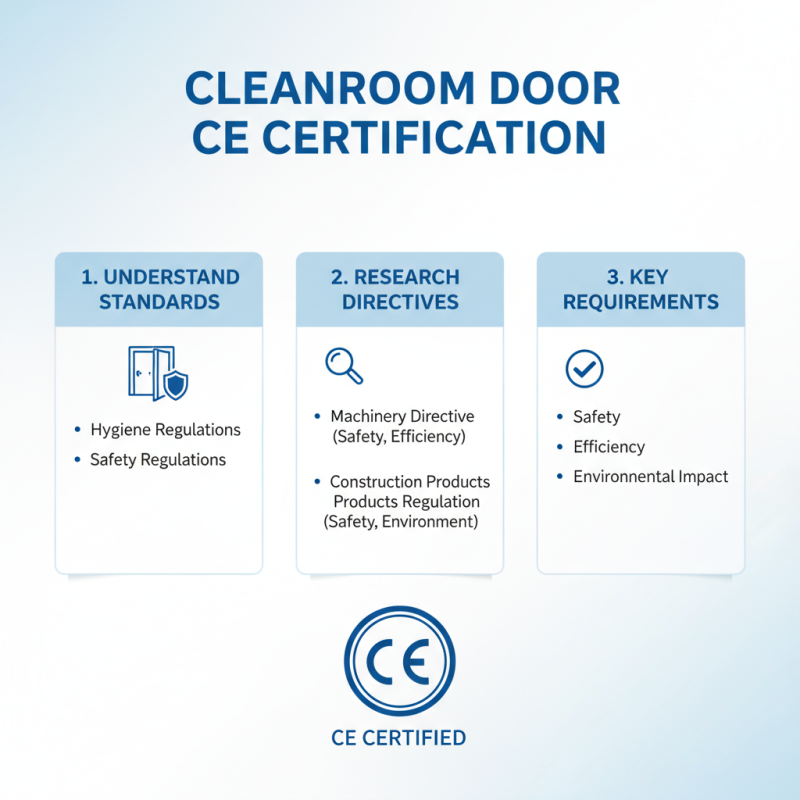
When preparing cleanroom doors for CE certification, start by understanding the essential standards. These doors must meet strict hygiene and safety regulations. Research applicable directives, like the Machinery Directive or the Construction Products Regulation. Each directive has specific requirements related to safety, efficiency, and environmental impact.

Next, conduct thorough testing of the door materials and designs. This process should include assessing the cleanroom’s air quality and contamination control. You should involve experts in cleanroom technology. Trial runs and performance evaluations reveal flaws that need attention. Sometimes, adjustments are overlooked, which can lead to compliance issues.

Documentation plays a crucial role in the certification process. Create detailed records of testing outcomes, material specifications, and manufacturing processes. This information is vital during inspections. Make sure to include a risk assessment report. It helps identify potential hazards. However, remember that not every detail will meet initial expectations. Learning from these insights can guide future projects. Emphasizing adaptability may improve your overall certification journey.

Testing Procedures and Standards for Cleanroom Doors

How to Obtain China CE Certification for Cleanroom Doors in Factories?

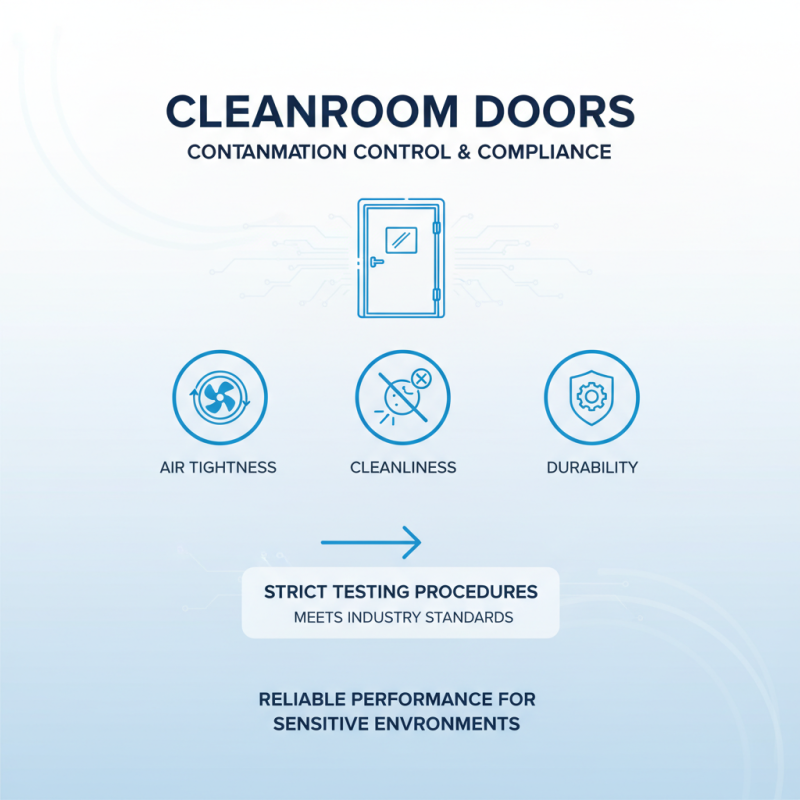
When it comes to cleanroom doors, meeting specific testing procedures and standards is crucial. These doors must provide reliable contamination control in sensitive environments. Manufacturers need to follow strict guidelines to ensure compliance. Testing often involves evaluating the door’s air tightness, cleanliness, and durability. Each test can vary depending on the intended use.

The testing process usually includes several key assessments. First, assessing the materials used is vital. They must resist contaminants and be easy to clean. Next, the door’s design and functionality play a significant role. They should operate smoothly without creating airflow disturbances. Finally, thorough inspections help in identifying potential failures. Firms might overlook the importance of regular audits, leading to costly mistakes.

Manufacturing cleanroom doors isn't just about passing tests. The balance between functionality and standards can be tricky. Some companies might rush production to meet demand. This haste may compromise the quality of testing. It's essential to maintain high standards throughout the manufacturing process, even if it takes more time. Continuous training and updates on standards can improve outcomes significantly.

Documentation Needed for CE Certification Application

Obtaining CE certification for cleanroom doors requires meticulous documentation. Factories must gather several key documents to support their application. This includes technical specifications, product descriptions, and compliance statements. Each document needs to clearly outline how the doors meet the essential safety and health requirements.

Preparation can be tricky. Ensure all documents are accurate and thorough. Incomplete submissions often lead to delays. Additionally, factories should include risk assessments and quality control procedures. These show a commitment to safety and performance.

Tips: Organize all documentation early. This will prevent last-minute chaos. Regular reviews of the documents will also help identify gaps. Remember that even small inaccuracies can cause setbacks. Be proactive in addressing any challenges your factory might face in the process. Keep communication open with certification bodies to clarify any doubts. This approach can save time and resources along the way.

Common Challenges in the CE Certification Process

Obtaining CE certification for cleanroom doors can be complex. One common challenge involves navigating the stringent regulations that govern cleanroom standards. Ensuring compliance with these requirements often feels overwhelming. Manufacturers must familiarize themselves with various standards, which may differ significantly across regions. This can lead to confusion and misinterpretation.

Another challenge is the testing process. Many manufacturers underestimate the time and resources needed for rigorous testing. Delays in achieving necessary test results can stall production schedules. Furthermore, the documentation required for CE certification can be tedious. Incomplete submissions often lead to setbacks, causing frustration for teams already working under tight deadlines.

Communication with certification bodies can also pose issues. Language barriers and differing expectations may create obstacles. Relying solely on third-party consultants might not always yield the best results. Teams must actively engage in the certification process. Failure to do so may result in unexpected hurdles along the way. It's crucial to remain adaptable and open to learning from each challenge encountered.

Maintaining Compliance Post-Certification for Cleanroom Doors

Maintaining compliance for cleanroom doors after obtaining China CE certification is crucial. Regular inspections should be scheduled to assess the physical condition of the doors. Look for signs of wear, such as scratches or dents. These can affect both functionality and compliance status. Small issues can turn into costly repairs if neglected.

Training staff on the standards is essential. They must understand what compliance looks like. Miscommunication or lack of knowledge can lead to mistakes. Employees should be aware of the importance of cleanroom integrity. Instill a culture of accountability within your team. Regular training sessions can help reinforce these values.

Documentation is another key aspect. Keep all records updated and easily accessible. If there is an audit, having organized files can save time and stress. Sometimes, missing documents can trigger compliance issues. Reflect on your methods for record-keeping. Is there room for improvement? Address any potential gaps in your process.

The Essential Guide to Cleanroom Doors: Selecting the Right Solutions for Controlled Environments

In controlled environments such as cleanrooms, the selection of appropriate doors is crucial for maintaining cleanliness and operational efficiency. Cleanroom doors are designed to mitigate contamination, and their features are vital for compliance with strict industry standards. According to industry reports, the right cleanroom door can play a significant role in minimizing particulate contamination, thus ensuring product integrity in sensitive environments such as pharmaceuticals and electronics.

The ideal cleanroom door should be lightweight yet durable, typically featuring a steel frame with varying thicknesses to withstand wear while maintaining hygiene. For instance, a door frame steel plate thickness of 1.2mm combined with a fan plate thickness of 0.8 to 1.0mm provides a balance between robustness and overall weight, enhancing usability. The internal filling options, including high-strength paper honeycomb or aluminum honeycomb, can contribute to effective thermal insulation and noise reduction, further fortifying the cleanroom's controlled conditions.

Customization is another significant aspect of cleanroom door selection. Designers are able to create doors that accommodate specific spatial restrictions, such as single or double door configurations with maximum dimensions of 1250mm x 2500mm for single doors and 2500mm x 2500mm for double doors. This flexibility ensures that cleanroom operations remain efficient and tailored to the specific needs of the facility, while accessories like antibacterial handles and access control systems further augment the cleanliness and safety of these essential entries. Reports indicate that investing in high-quality cleanroom doors can lead to increased operational efficiency and reduction in contamination risks, essential for meeting regulatory demands in controlled environments.

FAQS

: What is the main purpose of the article?

: The article discusses important tips for improving personal productivity. It highlights daily habits and techniques.

How can I start improving my productivity?

You can begin by setting clear goals. Write them down and review them often.

What role does time management play?

Effective time management helps prioritize tasks. It can reduce stress and improve focus throughout the day.

Are there specific techniques for staying focused?

Yes, consider the Pomodoro Technique. Work for 25 minutes, then take a 5-minute break.

How does environment affect productivity?

A clean, organized workspace enhances concentration. Remove distractions to create a more stimulating atmosphere.

Can habits impact productivity?

Absolutely, good habits build a productive routine. However, breaking bad habits can be challenging and take time.

What about motivation?

Motivation ebbs and flows. Finding personal reasons for tasks can help maintain enthusiasm over time.

Should I track my productivity?

Tracking can identify patterns and help you understand where improvements are needed. It may be eye-opening.

Is it important to rest?

Yes, regular breaks and rest are crucial. Overworking can lead to burnout and decreased overall productivity.

What should I do if I feel unproductive?

Reflect on your goals and habits. Sometimes, a simple change in routine can reignite your productivity.

Conclusion

Obtaining China CE Certification for cleanroom doors is crucial for compliance with local regulations and ensuring product quality in controlled environments. The process begins with understanding the regulatory requirements specific to cleanroom doors, which are designed to meet stringent cleanliness and safety standards. Manufacturers must prepare their products by adhering to established testing procedures and standards, ensuring that cleanroom doors meet the necessary performance criteria for certification.

Key steps include gathering essential documentation needed for the CE certification application and navigating common challenges that may arise during the process. After receiving certification, it is vital for manufacturers to maintain compliance with the relevant standards to uphold the integrity and functionality of their cleanroom doors in industrial settings. This proactive approach not only facilitates smoother operations but also enhances product reliability and safety in cleanroom applications.


Isabella

Isabella

Isabella is a dedicated professional marketing specialist with a profound expertise in the realm of temporary construction solutions. With a strong focus on standardization, modularization, and generalization, she plays a pivotal role in promoting the company's comprehensive service platform that......
Previous Why Wall Material Selection Impacts Your Building Energy Efficiency and Costs