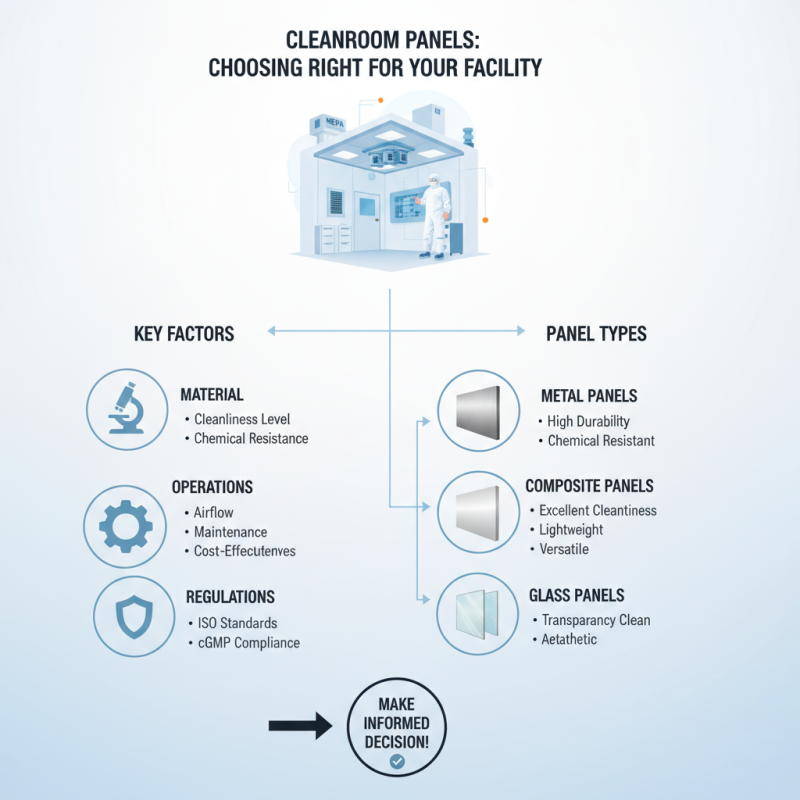
Picking the right cleanroom panels really matters if you want your facility to run smoothly. I mean, experts like Tom Becker from Cleanroom Solutions often stress how important this is. I remember he once said, ‘Getting the right panels in place keeps you compliant and helps with quality control,’ which kinda sticks with you, right?
Cleanroom panels can actually make a huge difference when it comes to air quality and how efficiently everything runs. For example, different materials can vary a lot—some are more durable, some are easier to keep clean. It's super important to think about what you actually need, especially if you're working in pharma or manufacturing. Otherwise, you risk contamination or ending up spending a ton on maintenance because of the wrong choices.
And honestly, not every panel is gonna be a perfect fit for your specific workspace. You’ve got to think about environmental conditions and industry standards, too. Taking all those things into account helps you figure out which panels will work best for you. Oh, and by the way, if you’re in the pharma biz, check out Pharmaceutical Cleanroom Panels — they’re a pretty specialized option that can seriously boost your operations.
Factors to Consider When Selecting Cleanroom Panels
Choosing the right cleanroom panels for your facility can significantly impact your operations. It is crucial to consider several factors before making a decision. For instance, the panel material is vital. Different materials offer various levels of cleanliness and durability. You might find that metal panels are more durable than others. However, they may not always be the best choice for every cleanroom environment.
Another important factor is the panel's surface. Smooth Surface Cleanroom Panels can minimize contamination risks. They are easier to clean and maintain. Additionally, think about the thickness of the panels. Thicker panels may insulate better but can also be heavier and harder to handle. Reflect on whether you have enough structural support for heavier options.
Finally, do not underestimate the installation process. A poorly installed panel can lead to gaps. These gaps may allow dust and contaminants to enter your cleanroom. Planning for maintenance is also essential. Even the best panels require care over time. Balancing all these factors can seem overwhelming at times. Taking a careful approach will yield better results in the long run.
Types of Cleanroom Panels and Their Applications
Cleanroom panels come in various types, each suited for specific applications. A popular option is the polyvinyl chloride (PVC) panel, often used in pharmaceutical settings. These panels are durable, easy to clean, and resistant to chemicals. According to a 2020 industry report, over 30% of cleanroom facilities use PVC panels due to their versatility.
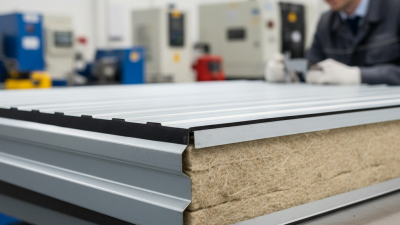
Another common type is metal-faced panels, known for their strength and longevity. They are frequently used in electronics manufacturing. Research indicates that metal panels can reduce contamination by up to 50% compared to other materials. However, their initial cost can be a barrier for smaller facilities.
Lastly, glass panels provide visibility and light transmission, ideal for laboratory environments. They allow observation without compromising cleanliness. Despite their benefits, they can be more difficult to install and maintain. Facilities must weigh these factors when selecting cleanroom panels. Material choice not only affects costs but also impacts overall performance and compliance with industry standards.
Material Options for Cleanroom Wall Panels
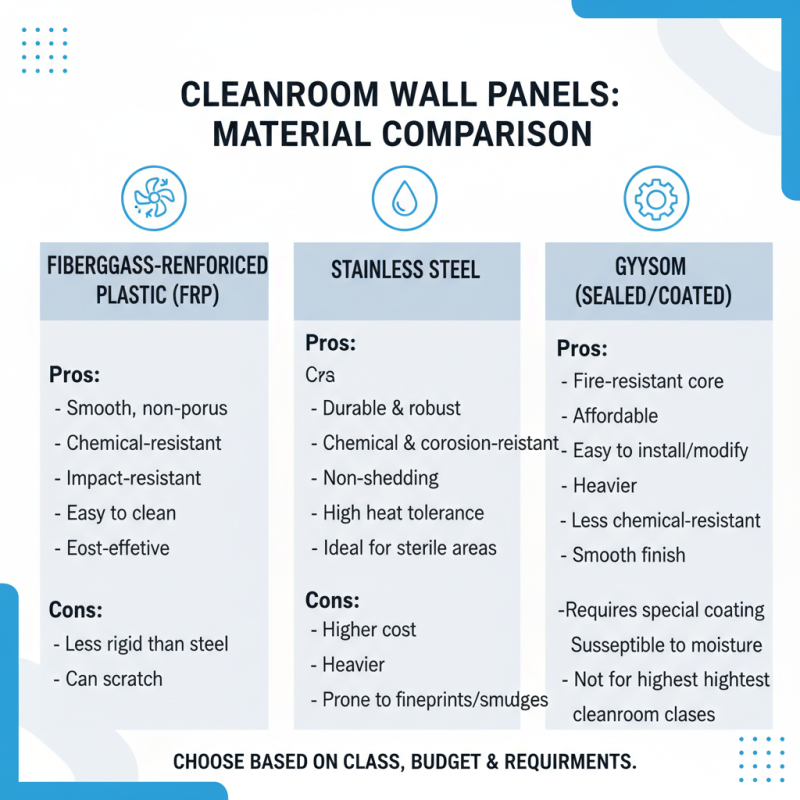
Choosing the right material for cleanroom wall panels is crucial for maintaining controlled environments. Various materials have distinct features. Some common options include fiberglass-reinforced plastic, stainless steel, and gypsum. Each material offers unique benefits and challenges.
Fiberglass-reinforced plastic, for instance, is lightweight and resistant to chemicals. However, it might not provide the same durability as metals. Stainless steel, on the other hand, is highly durable and easy to clean. The downside is its cost and potential for corrosion if not maintained properly. Gypsum panels are more economical but could struggle in high-humidity settings.
When selecting materials, consider the specific needs of your facility. Will there be heavy machinery? Is chemical exposure a concern? Reflecting on these questions can guide your choice. Each material choice comes with trade-offs that may require deeper analysis. It's essential to weigh each option carefully to find the best fit for your cleanroom.
Evaluation of Cleanroom Panel Performance Standards
When considering cleanroom panel performance standards, several key factors come into play. The
International Organization for Standardization (ISO)
has set guidelines that detail the required cleanliness levels for different applications. For instance,
ISO Class 5 requires a maximum of 3,520 particles per cubic meter, making
panel integrity crucial. Heat-Insulated Cleanroom Panels
can significantly impact maintaining these standards, especially in temperature-sensitive environments.
Evaluating thermal performance is another critical aspect. Studies show that poorly insulated panels can lead to
energy losses of up to 30%. Such inefficiencies not only increase operational costs but also compromise the stability of the controlled environment. Inconsistent temperatures may affect sensitive processes,
from pharmaceuticals to electronics manufacturing.
Additionally, there are often overlooked details in cleanroom panel selection. While a higher
R-value indicates better insulation, it may not always correlate with other performance metrics.
Manufacturers may focus heavily on thermal efficiency yet neglect particle filtration capabilities.
It’s important to weigh these parameters carefully and understand that a balance must be struck between insulation and cleanliness.
The Role of Cleanroom Panels in Contamination Control
Cleanroom panels play a crucial role in contamination control. They form the first line of defense against particles and contaminants. Choosing the right panels can significantly impact the cleanliness of your facility. For instance, Stainless Steel Cleanroom Panels are known for their durability. They resist corrosion and are easy to clean, making them ideal for controlled environments.
When selecting cleanroom panels, consider the material carefully. Various materials have different properties. Some might not hold up well under constant cleaning. Thin panels could easily get damaged. Choose panels designed for longevity. This choice ensures a sustainable solution for your cleanroom needs.
Tips: Remember to assess your facility's specific requirements. What level of cleanliness is needed? Ensure panels meet those standards. Consider how often the space requires cleaning. Frequent use could mean more wear and tear. Be mindful of installation as well. Poor installation can lead to gaps and vulnerabilities that allow contamination.
Additionally, think about the aesthetics. Cleanroom environments often need to look professional. A blend of function and style can enhance the overall atmosphere. So, while performance is key, do not overlook design choices that benefit your cleanroom's functionality.
How to Choose the Best Cleanroom Panels for Your Facility? - The Role of Cleanroom Panels in Contamination Control
| Panel Type |
Material |
Application |
Contamination Control Level |
Thermal Resistance |
Cost (per sq ft) |
| Polystyrene |
High-density polystyrene |
Light-duty cleanrooms |
Class 100,000 |
R-3 |
$15 |
| Aluminum Honeycomb |
Aluminum composite |
Medium-duty cleanrooms |
Class 10,000 |
R-5 |
$25 |
| Stainless Steel |
304 stainless steel |
Heavy-duty cleanrooms |
Class 1,000 |
R-7 |
$40 |
| Fiberglass |
Fiberglass reinforced plastic |
Cleanrooms with chemical applications |
Class 100 |
R-4 |
$30 |
| Polycarbonate |
Polycarbonate plastic |
Non-contaminating environments |
Class 10 |
R-2 |
$20 |
Budgeting for Cleanroom Panel Installation and Maintenance
When budgeting for cleanroom panel installation and maintenance, careful planning is essential. The costs can add up quickly. Start by evaluating the critical requirements of your facility. Each cleanroom type may have unique needs based on its purpose.
Tips: Analyze your current layout. See if the existing infrastructure supports your cleanroom design. This can save substantial costs on additional preparations or modifications.
Maintenance expenses also require attention. Regular inspections can prevent major issues. Allocate funds for repairs and replacements, as panels may wear over time. A reactive approach can lead to unexpected expenses.
Tips: Keep spare parts handy. This practice can reduce downtime and associated costs. Also, involve your maintenance team in the budgeting process. They provide insights into real-world wear and tear your panels endure.
Cost Comparison of Cleanroom Panel Types
This bar chart illustrates the cost per square foot for various types of cleanroom panels, helping you make informed budgetary decisions for your facility's cleanroom installation and maintenance.
Consulting with Experts in Cleanroom Design and Construction
When planning a cleanroom, the design and materials are crucial. Consulting with experts in cleanroom design ensures your facility meets industry standards. Professionals can help you understand the specific needs of your operation. High-Efficiency Cleanroom Panels are often recommended because they offer superior containment and cleanability.
Recent studies show that over 70% of contamination issues stem from inadequate panel choice. Experts will assess your space and operational requirements. They can guide you on materials that resist particulate contamination. This helps maintain compliance with ISO standards.
However, not all panels suit every situation. Some may fall short in durability or cost-effectiveness. It’s vital to consider how panel choice affects long-term operation. By working closely with professionals, you can avoid pitfalls in cleanroom design. Regular consultation can lead to updates in technology and standards. It’s a dynamic process that demands reflection and adaptability.
Innovative Curved Panels: Transformative Customization for Seamless Design Solutions
In the realm of architectural design, the emergence of innovative curved panels has significantly transformed customization capabilities, leading to seamless design solutions that cater to a varied array of aesthetic and functional needs. Recent industry reports indicate that the global demand for advanced panel systems is expected to grow by 8.5% annually through 2025, driven by an increasing emphasis on sustainable construction methods and aesthetic refinement. These modules not only enhance the visual appeal of structures but also optimize material usage, leading to significant reductions in aluminum consumption and waste.
The adaptability of modular assembly structures plays a crucial role in contemporary construction projects. According to analysis by the Building Industry Association, projects utilizing such systems exhibit a 20% improvement in construction efficiency compared to traditional methods. This is largely due to the ease of integration into complex enclosures, allowing architects and builders to select the ideal combinations tailored to specific functions without compromising design integrity. The elegant surfaces offered by these panels also contribute to creating cohesive and visually striking environments, solidifying the importance of innovation in achieving both form and functionality in design.
As the industry continues to evolve, these advancements not only promise improvements in efficiency but also foster enhanced collaboration between architects and designers, paving the way for more innovative solutions that meet the multifaceted demands of modern construction. The future of architectural design rests on the ability to harmonize aesthetic value with practical performance, a challenge that innovative curved panels are uniquely positioned to address.
FAQS
: The product aims to enhance daily routines and improve overall well-being.
Follow the instructions on the packaging carefully for optimal results.
Some users report minor discomfort. It's important to listen to your body.
Mixing products could lead to unexpected reactions. Proceed with caution.
Stop using it immediately. Consult a healthcare professional for guidance.
Not necessarily. Individual reactions vary; consider your personal health needs.
Conclusion
When selecting the best Cleanroom Panels for a facility, several key factors must be considered. These include the specific requirements for cleanliness and contamination control, the types of panels available, and their material options. Different types of Cleanroom Panels serve various applications, and understanding their performance standards is crucial for ensuring optimal functionality.
Furthermore, budgeting for installation and maintenance is an essential aspect, as it impacts long-term operational efficiency. Consulting with experts in cleanroom design and construction can provide valuable insights and help tailor solutions that meet the unique needs of the facility, ultimately enhancing safety and compliance in controlled environments.