Leave Your Message
0%

People are finally catching on—roofs aren't just about keeping the rain off anymore. They're becoming full-blown energy systems. Take Insulated Roofing, for example. It can seriously reduce heat transfer, keep condensation in check, and stop those annoying indoor temperature swings. But here's the kicker: it doesn't always work wonders. You've got to factor in your local climate, how well it's installed, proper ventilation, and whether the materials are compatible with each other. So it's not a one-size-fits-all solution, but when done right, it's a game changer.

Did you know that our buildings are actually pretty hungry for energy? The International Energy Agency did the math and found that they gobble up about 30% of the world's final energy. And they're not just eating energy—they're also coughing up a hefty chunk of emissions, around 26% of energy-related ones. Then you've got the UN Environment Programme chiming in with another number: in 2022, buildings and construction accounted for roughly 34% of global energy demand. So if you're thinking about roof insulation, these stats pretty much sell it—it's not just some boring spec sheet detail, it's a smart money move. But here's the catch: you can't just copy-paste a roof design. A roof that works great in Dubai? It might totally fail in Stockholm unless you're super careful about moisture and all that. So yeah, it's a bit of a balancing act.

Look, there's a guy named Dr. Joseph Lstiburek—founder of Building Science Corporation—who nails it when he says, “The building enclosure is a system, not a collection of components.” And honestly, that's the whole ballgame when you're buying materials. You can't just tick off boxes on a spec sheet. I mean, sure, you need to think about thermal resistance, vapor control, fire performance, wind uplift, recycled content, and whether the installers know what they're doing. But a shiny product sample? That proves next to nothing. What really counts is how the roof edge, fasteners, joints, and drainage path all work together. Because even a tiny gap can turn into a cold bridge—and trust me, you don't want that. You know, those poorly sealed penetrations? They're like an open door for moisture to get behind the insulation.

Look, reports can give you a decent starting point, but they shouldn't be your only source. You've got to check what's actually on the ground. And here's the thing: product declarations might follow different testing standards, so comparing them directly gets messy. Anyway, this guide covers ten insulated roofing tips for global buyers. But let's be honest, the cheapest roof isn't usually the most cost-effective one over its lifetime. To make sound decisions, you need verified data, a local engineer to look things over, and you have to keep up with maintenance.
10 Insulated Roofing Tips for Global Buyers

Understanding Insulated Roofing Systems and Their Core Functions

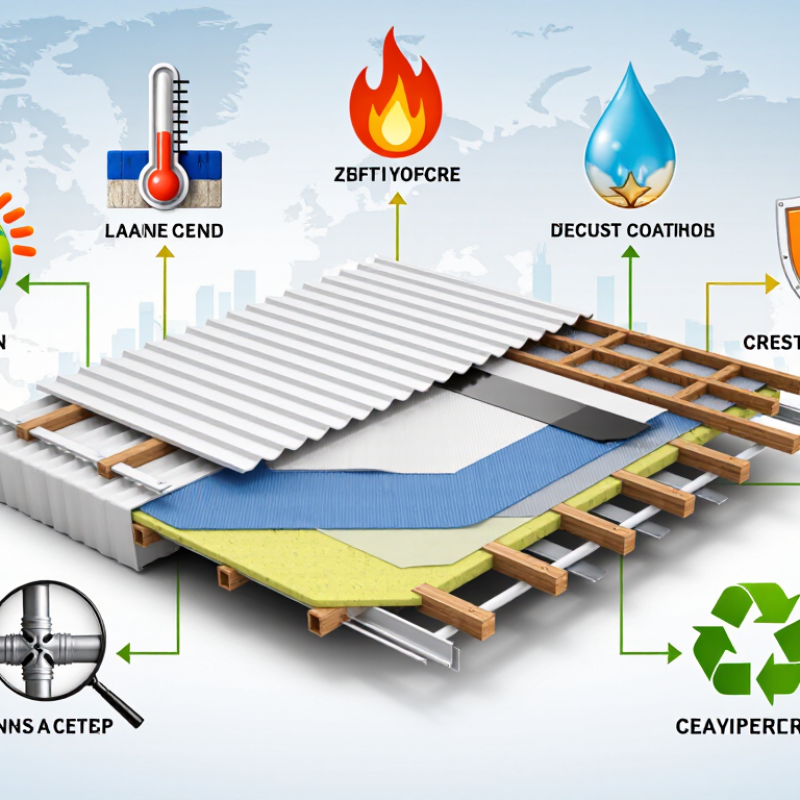
Insulated roofing systems do more than cover a building. They manage heat flow, moisture, air movement, and structural exposure. The International Energy Agency reports that buildings consume about 30% of global final energy. Roof performance therefore affects both operating costs and indoor comfort.

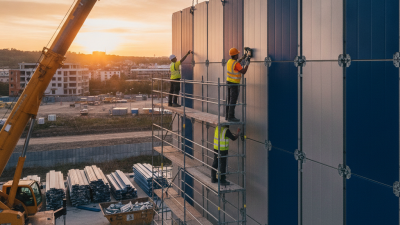
A typical system combines metal sheets, insulation, vapor control, and sealed joints. Insulation slows heat transfer through the roof assembly. Vapor control limits condensation when warm indoor air meets cold metal. Continuous insulation works better because exposed purlins can create thermal bridges. During Sheet Metal Roofing Installation, contractors should check fastener spacing, panel alignment, flashing, and penetrations. Small gaps around skylights can become visible problems during heavy rain.

Details matter.

The U.S. Department of Energy explains that insulation performance depends on its tested R-value and installation quality. Compression, moisture, and poor fitting can reduce practical performance. Global buyers should request thermal calculations, fire-performance documents, corrosion data, and installation records. The roof should also match the local climate, wind exposure, and indoor humidity. A coastal warehouse needs different protection from a dry inland workshop. This is where specifications can fail. A higher insulation value does not automatically fix poor drainage or weak detailing. Experienced installers inspect the roof after installation, not only before payment. Mistakes can happen, and honest inspection is part of reliable procurement.

Comparing Insulation Materials for Different Climate Conditions

10 Insulated Roofing Tips for Global Buyers

Comparing insulation materials starts with climate, not price. The IEA’s 2023 Global Status Report states that buildings consume about 30% of global final energy. Roof heat transfer matters most beneath dark, exposed surfaces. In hot climates, reflective roof membranes and continuous rigid boards can reduce solar heat gain. Closed-cell foam offers strong air sealing, but installation quality remains critical. Small gaps can become hot, dusty paths.

Cold regions need thicker insulation and careful vapor control. Mineral fiber performs reliably around high temperatures and tolerates uneven roof spaces. Rigid polyisocyanurate provides high thermal resistance in limited thickness, although its performance may decline in very low temperatures. The U.S. Department of Energy recommends attic insulation levels around R-49 to R-60 in many cold zones. Local standards still control. Do not copy a foreign specification blindly.

Humid and tropical buyers should prioritize drainage, ventilation, and mold resistance. The ASHRAE Handbook divides global conditions into climate zones, supporting climate-specific envelope design. In coastal areas, select corrosion-resistant fasteners and sealed joints. In monsoon regions, inspect laps after heavy rain. In high-altitude locations, account for stronger ultraviolet exposure and larger temperature swings. Field inspections often find compressed insulation near penetrations. That detail is easy to miss. My imperfect rule is simple: compare declared thermal values, aged performance, fire behavior, moisture response, and repair access together. A cheaper system may become expensive after one failed wet season.

Evaluating Thermal Performance, Thickness, and Energy Efficiency

10 Insulated Roofing Tips for Global Buyers

Evaluating Thermal Performance, Thickness, and Energy Efficiency

Global buyers should match roof insulation with the local climate, not rely on thickness alone. Hot regions need strong solar control, while cold climates demand lower heat transfer. Check the declared U-value and R-value under recognized testing conditions. Lower U-values usually indicate better insulation performance. However, test methods can differ between countries.

A thicker panel is not automatically better. Core density, material structure, moisture resistance, and compression strength also affect long-term results. Inspect thermal bridges around fasteners, roof edges, joints, and service openings. Small gaps can weaken an otherwise efficient roof. Properly sealed overlaps matter. They are often overlooked. Field assessments frequently find that installation quality reduces real-world performance more than the panel specification suggests.

Energy efficiency depends on the complete roof system. Consider surface reflectance, ventilation, airtightness, drainage, and the building’s heating or cooling load. Ask for independent test reports, aging data, and clear installation tolerances. Compare performance across the same measurement standard. A digital energy model can estimate annual demand, but it remains an estimate. Local weather files may be incomplete or outdated. Review condensation risk in humid areas, especially where indoor air is warm. Before approval, inspect sample joints and measure actual thickness at several points. That extra check may expose manufacturing variation or damaged edges.

10 Insulated Roofing Tips for Global Buyers: Evaluating Thermal Performance, Thickness, and Energy Efficiency

This chart compares typical nominal R-value per inch with the approximate thickness required to achieve R-30. Higher R-values generally provide greater thermal resistance with less material thickness. Actual performance depends on density, moisture, installation quality, thermal bridging, aging, local climate, and building-code requirements. Buyers should verify declared thermal conductivity and tested product data before selection.

Selecting Roofing Profiles, Coatings, and Structural Components

10 Insulated Roofing Tips for Global Buyers

Selecting insulated roofing requires more than comparing panel prices. Profile depth controls drainage, spanning ability, and wind performance. Choose the core thickness after checking local temperature data, indoor humidity, and energy targets.

The IEA Buildings 2023 report states that buildings accounted for about 30% of global final energy use in 2022. Thermal performance deserves serious attention.

Check purlin spacing before approving the roof profile. Confirm dead loads, maintenance loads, snow, wind uplift, and seismic demands with a qualified engineer. A thicker panel may still fail if fasteners miss the supporting steel. Keep thermal bridges in view. Use continuous seals, compatible washers, and carefully aligned joints. Small gaps become visible problems.

Coating selection should reflect climate, not appearance alone. Coastal projects need stronger corrosion resistance, while high-UV regions require tested finish durability. Confirm coating thickness, salt-spray evidence, and warranty conditions in writing. Avoid mixing incompatible metals.

Review fire classification, smoke performance, and local code requirements before shipment. Plan drainage around laps and penetrations. Water always finds weak details.

Allow for thermal movement, especially on long roof runs. Keep installation records, batch numbers, and inspection photos. These details support traceability and future repairs.

The World Green Building Council notes that material choices influence whole-life carbon, yet many buyers still compare only upfront cost. That habit is hard to defend. Supplier documents can also be incomplete, so independent verification remains worthwhile.

Checking Moisture Control, Ventilation, and Fire Safety Requirements

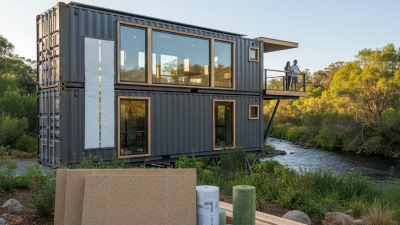
For global buyers, moisture control starts before the panels arrive. In a Container House Roofing project, inspect the roof deck for oil, dust, and trapped water. A small puncture can become a wet ceiling after one monsoon season. Use continuous insulation, sealed laps, and a properly sized vapor control layer. Climate matters. A vapor strategy suitable for a cold inland site may fail in a humid coastal region.

Ventilation needs a clear path from eaves to ridge. Do not block it with insulation or poorly fitted fasteners. The U.S. Environmental Protection Agency generally recommends indoor relative humidity between 30% and 50%, which helps limit condensation and mold growth. The UNEP 2023 Global Status Report states that buildings consumed about 34% of global energy and produced about 37% of energy-related emissions in 2022. Better insulation helps, but only when air leakage and moisture are controlled together. This is where many specifications look complete but perform poorly.

Fire safety deserves written verification, not verbal promises. Request reaction-to-fire classifications, test conditions, and installation limits for every insulation and roof assembly. The NFPA report Fire Loss in the United States During 2022 recorded approximately 1.5 million fires and 18.1 billion dollars in property damage. Metal skins do not automatically make an insulated roof fire-safe. Check penetrations, service openings, electrical routes, and drainage details. I have seen beautiful roofs fail because one unsealed joint was ignored. A second review is sometimes necessary.

Planning Installation, Maintenance, and Long-Term Performance

Planning an insulated roof begins with the building’s climate, use, and maintenance access. Record temperature ranges, humidity, wind exposure, and rainfall before selecting materials. Heat-Insulated Cleanroom Panels require careful compatibility checks with wall systems, seals, and internal finishes. Small gaps can become serious thermal bridges. They can also collect condensation and dust.

Use a licensed engineer to confirm structural loads, drainage slopes, fire performance, and local construction requirements. Store panels flat, dry, and raised from the ground. Do not remove protective film too early. During installation, inspect every joint, fastener, flashing, and service opening. A clean seal matters. Leave room for safe inspection. In cold regions, installers should check vapor-control layers carefully. In hot, humid regions, they should test moisture movement and cooling loads. These details often decide long-term performance.

Maintenance should follow a written schedule, not memory. Inspect roof penetrations after severe weather. Clean drains before leaves and sediment block them. Check sealant for shrinking, cracking, or poor adhesion twice each year. Replace damaged components quickly, but investigate the cause first. Otherwise, the same failure may return. Keep photographs, repair dates, and inspection notes for future teams. One practical lesson is uncomfortable: even good materials fail when installation is rushed. Budgeting for access, testing, and trained labor may feel excessive at first. It usually costs less than repeated repairs, indoor contamination, or lost production.

10 Insulated Roofing Tips for Global Buyers - Planning Installation, Maintenance, and Long-Term Performance

No. Project Stage Insulated Roofing Tip Practical Benchmark Maintenance or Inspection Frequency Long-Term Performance Impact
1 Climate Planning Select insulation thickness according to the local climate zone, building use, and applicable energy code rather than using one thickness for every market. Confirm the required thermal resistance in both SI units, such as m²·K/W, and imperial R-value before ordering. Review requirements during design changes or when the project location changes. Reduces the risk of under-insulation, excessive material cost, and non-compliance with local regulations.
2 Material Selection Compare thermal conductivity, moisture resistance, fire classification, compressive strength, and service temperature—not thermal resistance alone. Request independently verified technical data for thermal conductivity and fire performance at the intended temperature range. Check certificates and technical data whenever the supplier, product formulation, or production site changes. Improves durability and helps prevent premature loss of insulation performance.
3 Moisture Control Design a continuous water-control layer and vapor-control strategy appropriate for indoor humidity, outdoor climate, and roof assembly direction. Keep insulation dry during transport and installation; do not install visibly wet or contaminated materials. Inspect after heavy rain, snow, storms, or any reported roof leak. Limits mold risk, corrosion, freeze-thaw damage, and loss of effective thermal resistance.
4 Thermal Continuity Minimize thermal bridges at fasteners, purlins, joints, parapets, roof edges, penetrations, and service openings. Use staggered joints, tightly fitted boards or panels, and carefully detailed perimeter insulation. Check joints and penetrations during routine roof inspections and after alterations. Reduces localized heat loss, surface condensation, and uneven interior temperatures.
5 Ventilation Design Provide a properly detailed ventilation path where the roof assembly requires it, while avoiding uncontrolled air leakage. Maintain clear intake and exhaust paths and keep vents free from insulation blockage, insects, snow, and debris. Inspect at least twice per year and after severe weather where accessible. Helps manage heat and moisture in ventilated roof spaces and extends the service life of roof components.
6 Installation Quality Use trained installers and follow the system installation instructions for cutting, fastening, sealing, alignment, and allowable tolerances. Record installation conditions, including substrate dryness, ambient temperature, product batch, and completed inspection points. Perform checks at delivery, during installation, and at practical completion. Reduces callbacks, air leakage, panel movement, and installation-related defects.
7 Fire Safety Verify the complete roof assembly’s reaction-to-fire and fire-resistance requirements; do not rely only on the insulation core rating. Check local requirements for roof covering, insulation, membranes, penetrations, cavity barriers, and edge details. Review after any change to roof layers, penetrations, equipment, or nearby building use. Supports occupant safety, regulatory compliance, and responsible risk management.
8 Weather Protection Choose roof membranes, flashings, coatings, and sealants that are compatible with the insulation and suitable for local UV, wind, rain, snow, and temperature conditions. Confirm compatibility in writing before combining products from different suppliers. Inspect flashings, sealants, laps, and exposed surfaces at least annually. Prevents water ingress and protects the insulation from ultraviolet and weather-related degradation.
9 Loading and Access Plan safe access routes and load-spreading measures for installers, maintenance staff, solar equipment, and rooftop services. Follow the system’s maximum allowable loads and use designated walkways or protection boards where required. Inspect after maintenance work, equipment installation, or any suspected impact damage. Limits crushing, punctures, deflection, and hidden damage to insulation and waterproofing layers.
10 Lifecycle Management Create a roof asset record containing product data, drawings, warranties, installation photographs, inspection results, and repair history. Schedule a documented roof condition survey at least once per year, with additional checks in harsh climates. Annual inspection; clean drainage systems and remove debris as needed. Enables early repairs, more accurate maintenance budgeting, and longer service life for the complete roof assembly.

Note: Thermal, fire, structural, and moisture requirements vary by country, climate zone, building type, and roof assembly. Always verify the complete design against current local regulations and project-specific engineering requirements.

Assessing Costs, Certifications, and Supplier Reliability Worldwide

10 Insulated Roofing Tips for Global Buyers

Global buyers should compare landed cost, not factory price. Freight, port handling, duties, insurance, and local installation can change the final figure sharply. Request a cost sheet with panel thickness, coating, core density, packaging, and replacement terms. The 2024 UNEP Global Status Report states that buildings consumed 32% of global energy and produced 34% of energy-related emissions in 2022. Better thermal performance deserves a measured payback review, not vague efficiency claims.

For an Insulated Rockwool Sandwich Panel, verify thermal conductivity, fire reaction, water absorption, and compressive strength through independent test reports. EN 14509 may apply in European markets, while other regions may require different fire or structural standards. ISO 9001 supports process control, but it does not prove every panel meets the promised specification. Check certificates by number and issuing laboratory. I would not treat a logo on a PDF as evidence. Ask for batch traceability, production dates, and samples cut from current stock.

Supplier reliability needs physical evidence. Review audited production capacity, export experience, complaint records, and spare-part or replacement procedures. The World Bank’s 2023 Logistics Performance Index shows that international delivery remains uneven across customs, infrastructure, and timeliness. Build schedule buffers. A factory may quote seven days, yet port congestion can extend delivery considerably. Inspect packaging: crushed corners, wet insulation, and loose film often appear before installation. One practical mistake is trusting a perfect sample; request random batch testing before shipment.

FAQS

Does a thicker insulated roof panel always provide better performance?

No. Core density, moisture resistance, compression strength, and panel structure also matter. Thickness alone can mislead.

Which thermal values should buyers compare?

Check declared U-values and R-values under recognized testing conditions. Compare products using the same measurement method. Lower U-values usually indicate better insulation.

Where do thermal bridges commonly occur?

Inspect fasteners, roof edges, joints, overlaps, and service openings. Small gaps can reduce performance sharply. Sealed joints matter.

How should buyers control moisture in different climates?

Match the vapor-control strategy to local conditions. Humid coastal roofs need careful condensation planning. Inspect the roof deck for dust, oil, water, and punctures.

What ventilation details deserve attention?

Keep a continuous air path from the eaves to the ridge. Insulation and misplaced fasteners must not block it. Indoor humidity around 30% to 50% can help limit condensation.

What fire-safety documents should buyers request?

Request reaction-to-fire classifications, test conditions, and assembly limits. Check penetrations, electrical routes, openings, and drainage details. Metal skins do not guarantee fire safety.

How can buyers calculate the real project cost?

Compare landed cost, not only the factory price. Include freight, handling, duties, insurance, packaging, installation, and replacement terms. Payback calculations are useful, but estimates can be wrong.

How can buyers verify supplier reliability before shipment?

Request independent test reports, batch traceability, production dates, and current-stock samples. Inspect random batches before shipment. A perfect sample is not enough.

Conclusion

Insulated Roofing is a practical solution for improving indoor comfort, reducing energy consumption, and protecting buildings in diverse climates. Global buyers should first understand how an insulated roofing system combines roof panels, insulation layers, structural components, and protective finishes. Material selection should reflect local temperature, humidity, rainfall, wind, and snow conditions. Key comparisons include thermal performance, insulation thickness, durability, weight, and long-term energy efficiency. Buyers should also evaluate roofing profiles and coatings for weather resistance, corrosion protection, drainage, and compatibility with the building structure.

A reliable roofing plan must address moisture control, ventilation, condensation prevention, and fire safety requirements before installation begins. Proper detailing, professional installation, routine inspections, and timely maintenance are essential for preserving performance over many years. Total cost should include transportation, labor, accessories, maintenance, and expected service life rather than only the initial purchase price. Finally, buyers should verify relevant certifications, technical documentation, quality controls, warranty terms, production capacity, communication practices, and supplier reliability to support safe, compliant, and consistent purchasing across international markets.
Isabella

Isabella

Isabella is a dedicated professional marketing specialist with a profound expertise in the realm of temporary construction solutions. With a strong focus on standardization, modularization, and generalization, she plays a pivotal role in promoting the company's comprehensive service platform that......
Previous How to Choose the Best Metal Sandwich Panel Roof?